



Denture fit problems are a consistent challenge in restorative practices, and the causes are rarely one-dimensional. Impressions, bite records, ridge anatomy, occlusion, tissue changes over time, and patient adaptation all influence the final result, and so does the lab that fabricates the case. When the clinical records are accurate, the quality and consistency of the lab's fabrication still shape how well the finished denture fits, and material variability, manual technique, and limited quality control can each add to the adjustments or remakes a case needs.
Understanding where fit problems actually originate, and which part of the process is responsible, is the first step toward reducing how often they occur.
Most dentists who handle a steady volume of removable prostheses hear the same complaints repeatedly.
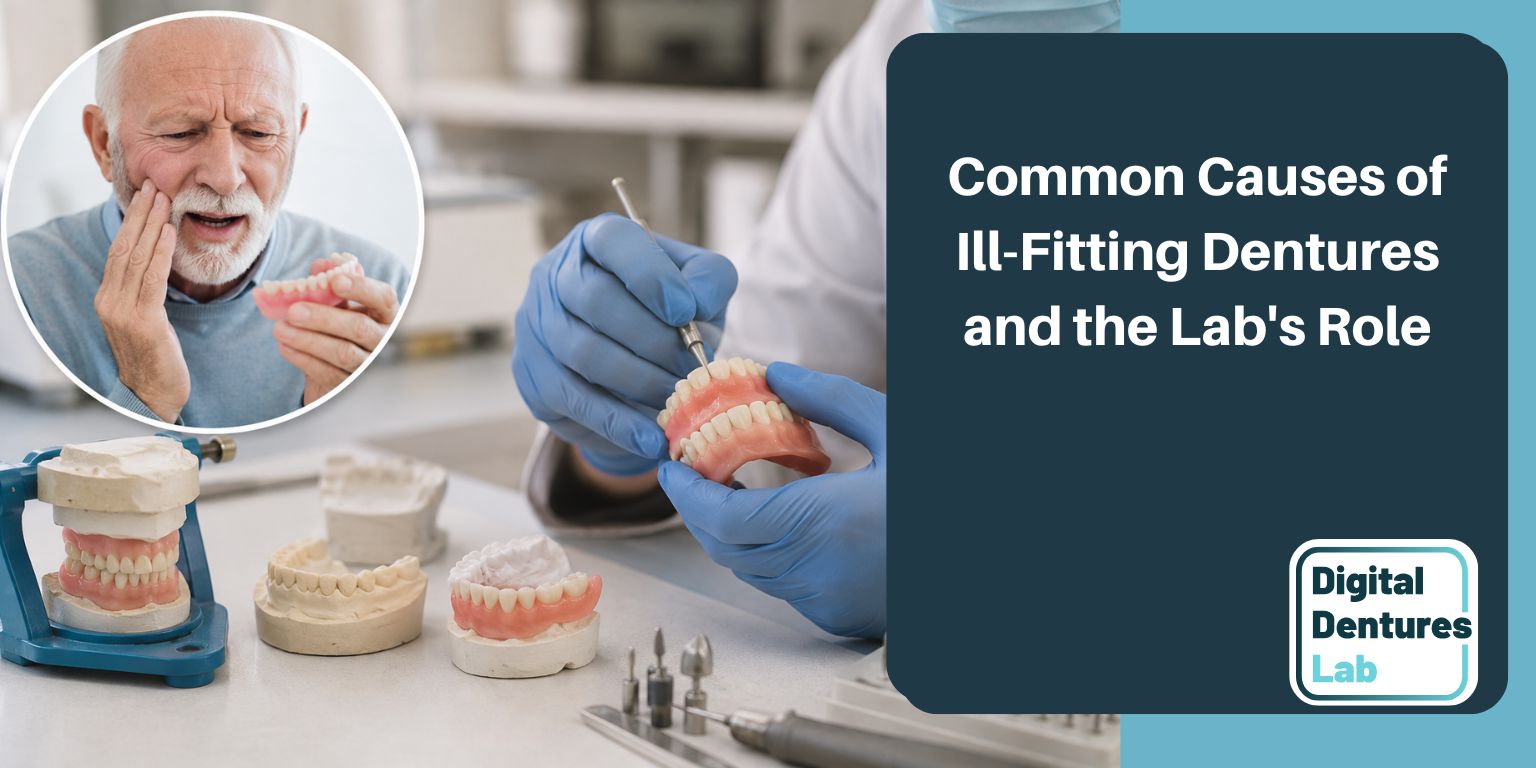
Loss of retention during function is one of the most common. A prosthesis that shifts or lifts during eating or speaking can undermine patient confidence quickly. Soreness, gum irritation, pressure points, and soft tissue abrasion are also frequent, and tend to develop when the prosthesis does not distribute load evenly across the ridge.
Appearance is another common concern. Patients notice when teeth look too large, too uniform, or the wrong shade. Less obvious but equally frustrating: dentures that are difficult to eat with, feel uncomfortable from day one, or require repeated denture adjustment visits before they settle.
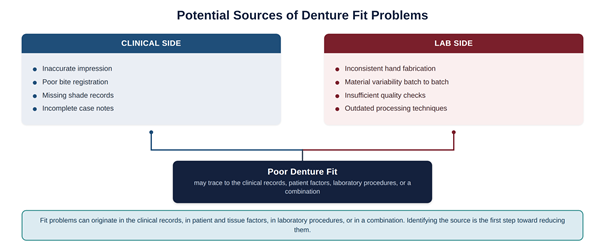
Understanding why dentures become loose or create problems means recognizing that poor fit may result from the clinical records, laboratory procedures, or changes in the denture-bearing tissues.
On the clinical side: an inaccurate impression, a poor bite registration, or incomplete patient records sent to the lab can undermine even the most skilled fabrication. Impression materials that distort, trays that flex, or records captured without adequate patient cooperation all introduce error before the case leaves the practice.
On the lab side: inconsistent manual fabrication, material variability between batches, insufficient quality control, and outdated processing techniques can compound whatever the clinical records provide. Hand-packing and processing can introduce porosity if it is not carefully controlled. Manual wax-ups vary by technician. Cases shipped without internal checks can arrive with denture fit problems that require immediate correction.
The important distinction: a dentist can execute the clinical side correctly and still receive a poorly fitting prosthesis if the lab fabrication is not reliable. The lab is not a passive participant. It is a critical link in the outcome.
Fabrication choices made inside the lab strongly influence how well a removable prosthesis fits, how comfortable it is, and whether it will need adjustment after delivery, alongside the clinical records, the patient's anatomy, occlusion, and how well the patient adapts.
The material matters. Acrylic sourced inconsistently across batches behaves differently under processing and in the mouth. Material biocompatibility can occasionally contribute to tissue irritation, though pressure points, occlusion, hygiene, and normal tissue changes are more common explanations. Processing technique matters as well: shrinkage, porosity, and surface inconsistency are downstream effects of how the material is handled during fabrication.
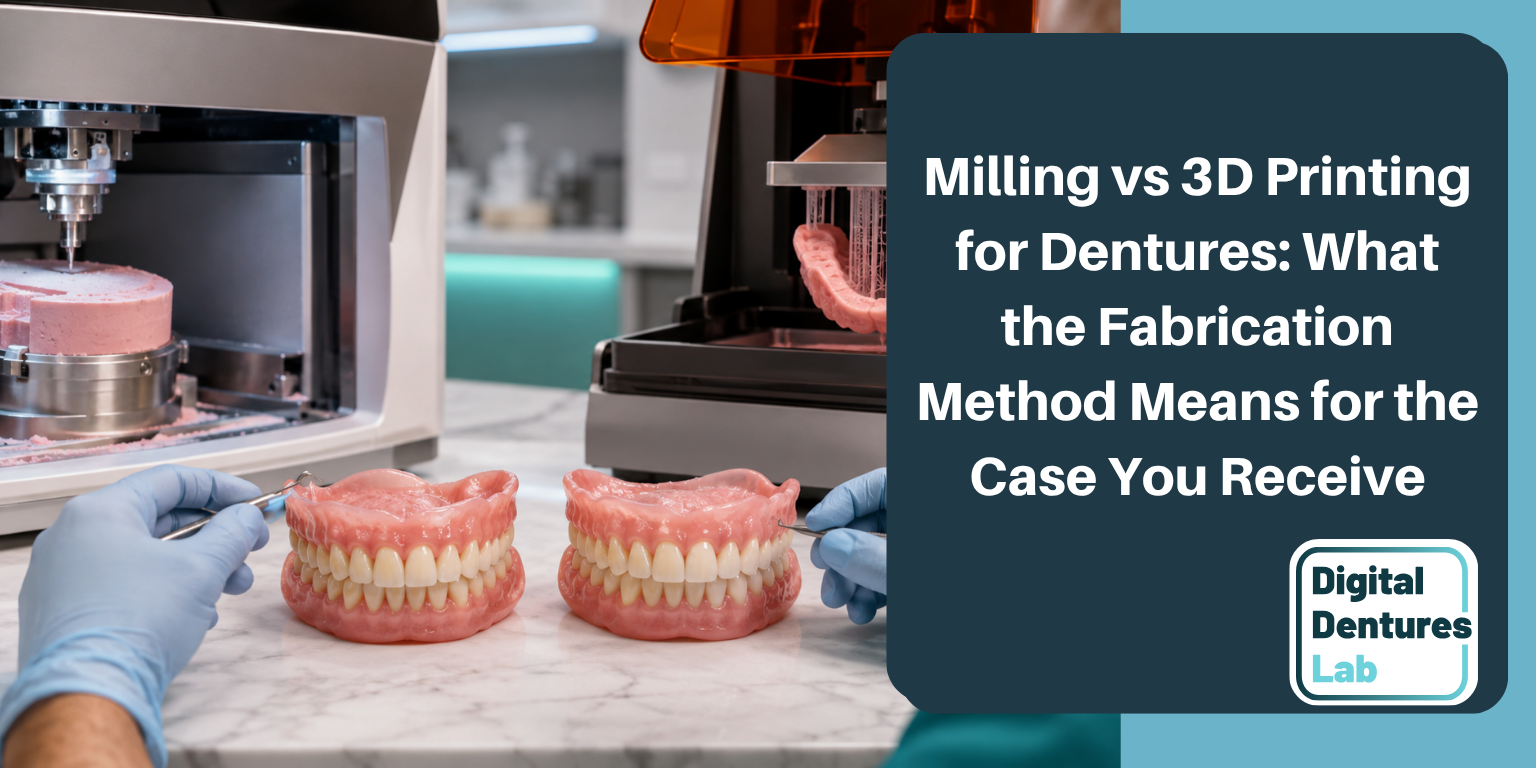
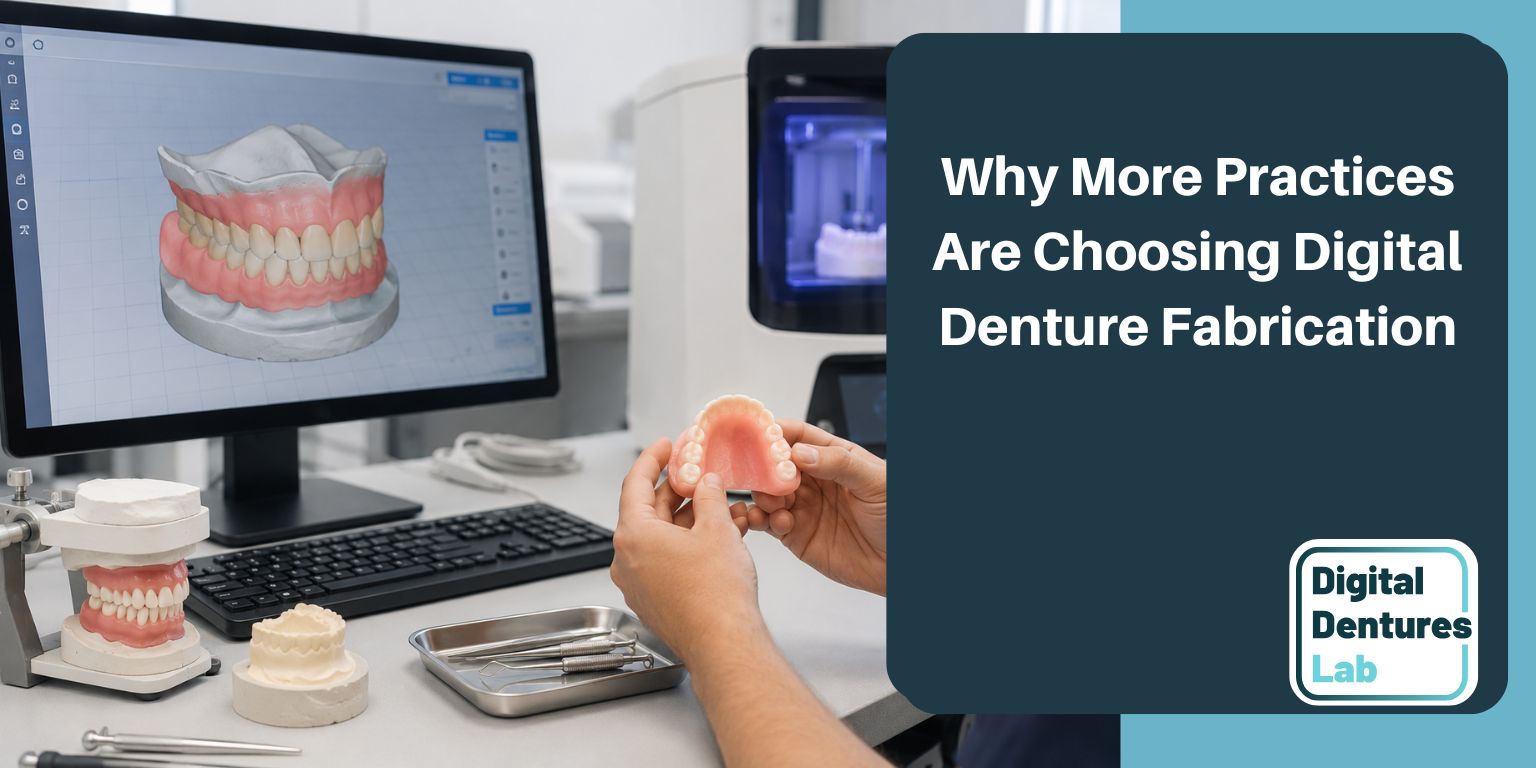
Method plays a role too. Traditional hand fabrication relies on technician skill at each step. Digital fabrication replaces many of those manual steps with CAD/CAM design and milling or 3D printing, producing restorations built to a measurable specification. This can reduce the variation that manual steps introduce. A systematic review of CAD-CAM dentures found that digital adaptation is generally acceptable, though accuracy varies by technique and CAD/CAM system. The final result still depends on the impression or scan, the bite records, the design, finishing, and quality control.
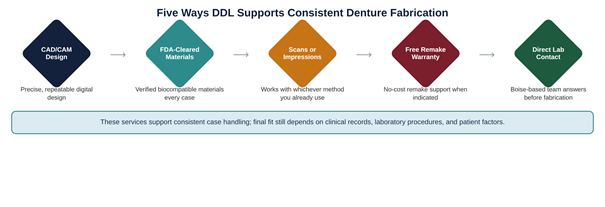
Digital Dentures Lab addresses denture fit problems at the fabrication level, before the case ships.
CAD/CAM design builds each case to a measurable digital specification, which supports standardized production from one case to the next. FDA-cleared, biocompatible materials are used across every case, with documented sourcing. Standardized design and documented materials remove some variables from the process, though final fit still depends on the clinical records, the design, finishing, and quality control.
Digital Dentures Lab accepts both digital scans and traditional impressions for full and partial dentures, so practices do not need to change their capture method. When a case needs it, DDL remakes it at no charge, and the Boise-based team can contact the office if the records need clarification before fabrication. That kind of exchange can help resolve a potential issue before any material is shaped.
The lab cannot compensate for a compromised impression or missing records. Accurate impressions, correct bite registration, shade selection documented against the patient’s existing dentition, and complete case notes all improve what the lab can produce.
In practice, complete records and clear communication with the lab help reduce avoidable problems. A reliable lab relationship, consistent materials, predictable timelines, and a team that raises questions before fabrication rather than sending back a finished case all support more predictable results.
Fewer denture adjustment appointments and remakes, along with less patient dissatisfaction, are the kinds of improvements a dependable fabrication partner can help support, case by case, alongside sound clinical records.
The lab choice is not a production decision. It is a practice management decision that shows up in the patient experience every time a case comes back from fabrication.
Contact Digital Dentures Lab to discuss case submission, turnaround, and remake support.
Bone resorption under the denture base gradually changes the shape of the underlying ridge, so a fit that was accurate at delivery becomes less precise over time. Current prosthodontic guidance recognizes that these ridge and soft-tissue changes are expected, and regular check-ins can catch them before they become a patient concern.
The lab determines the material used, the fabrication method, and the precision of the design. Digital workflows can reduce variation in selected steps, and the lab's quality control determines whether fit issues are caught before shipment. Even so, final fit still depends on the clinical records, the design, processing, finishing, and quality control.
Accurate final impressions, correct bite registration, shade selection with reference to the patient’s existing dentition or guide, and any notes about occlusal requirements or patient-specific concerns all help the lab produce a more accurate result.
One or more minor adjustments after delivery may be needed. Repeated or unresolved problems should prompt a review of pressure areas, occlusion, tissue response, patient adaptation, and laboratory factors.
Document the specific issues, contact the lab directly with a description of the problem, and determine whether the issue is adjustable chairside or requires a remake. A quality lab should make the remake process straightforward and at no additional cost.

Get updates, case details, and lab innovations to support your practice and patient outcomes.