
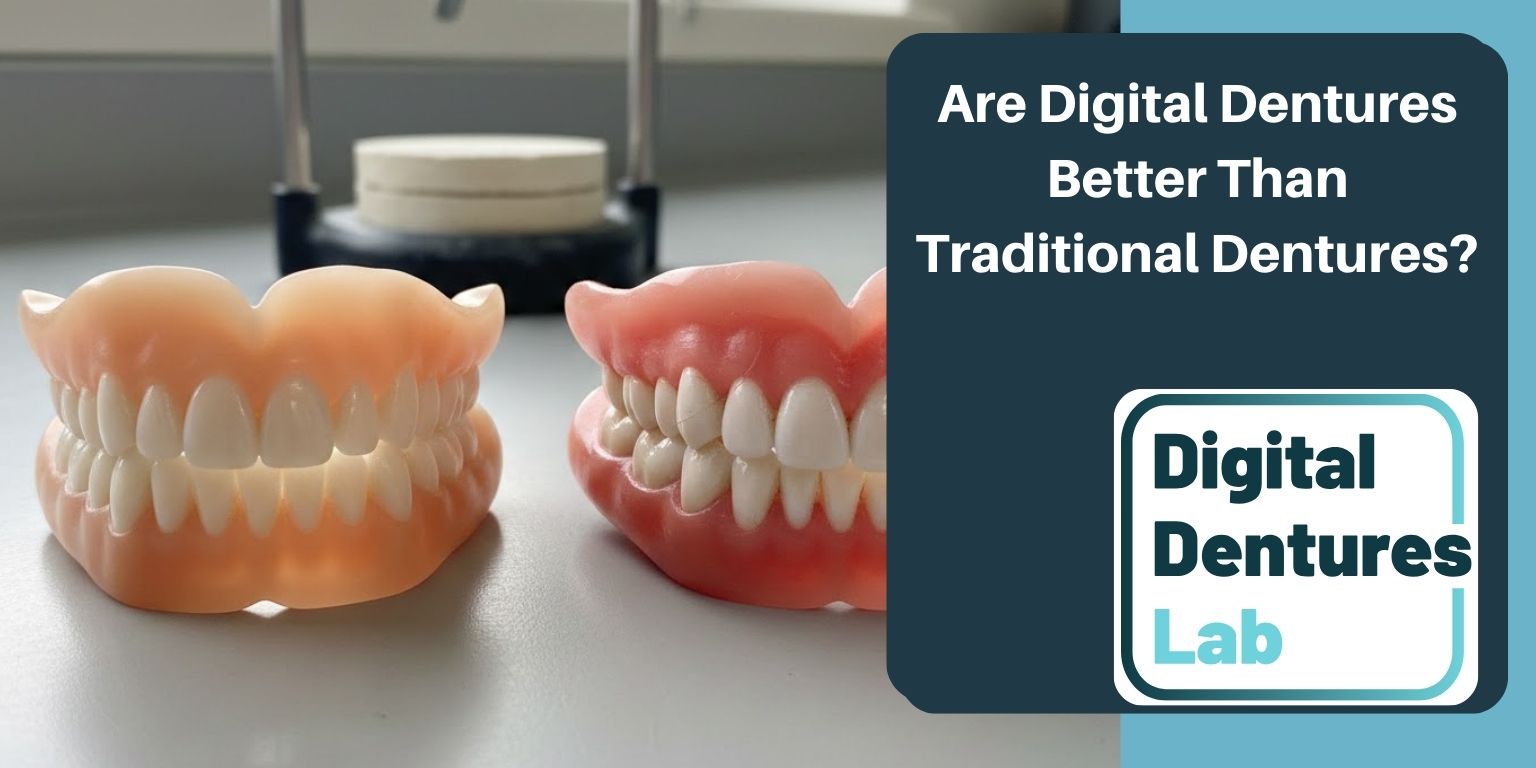



Digital dentistry has steadily transformed how restorative cases are planned and delivered. Denture fabrication is no exception. As more practices adopt digital workflows, a common question arises, are digital dentures better than traditional dentures? From a clinical and operational perspective, digital dentures offer clear advantages in accuracy, efficiency, and overall value.
By replacing labor-intensive manual steps with CAD/CAM-driven processes, digital workflows enable lower-cost production through efficiency, faster turnaround times, and predictable outcomes, without lowering material or regulatory standards. For practices focused on consistency and scalability, digital dentures are becoming the preferred solution.
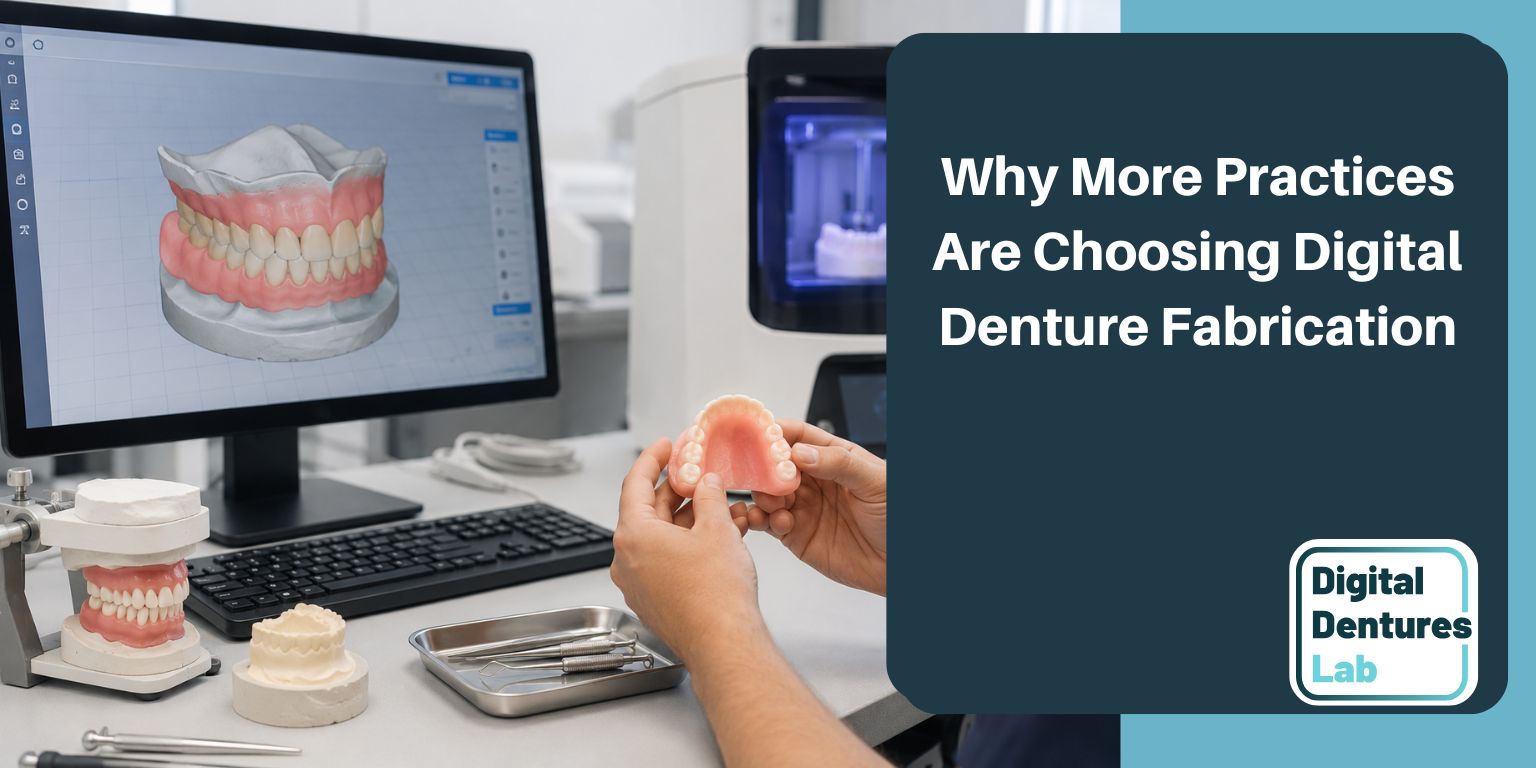
Digital dentures are dentures designed and manufactured using CAD/CAM technology. The process begins with digital impressions or scanned models, which are used to create a precise virtual denture design.
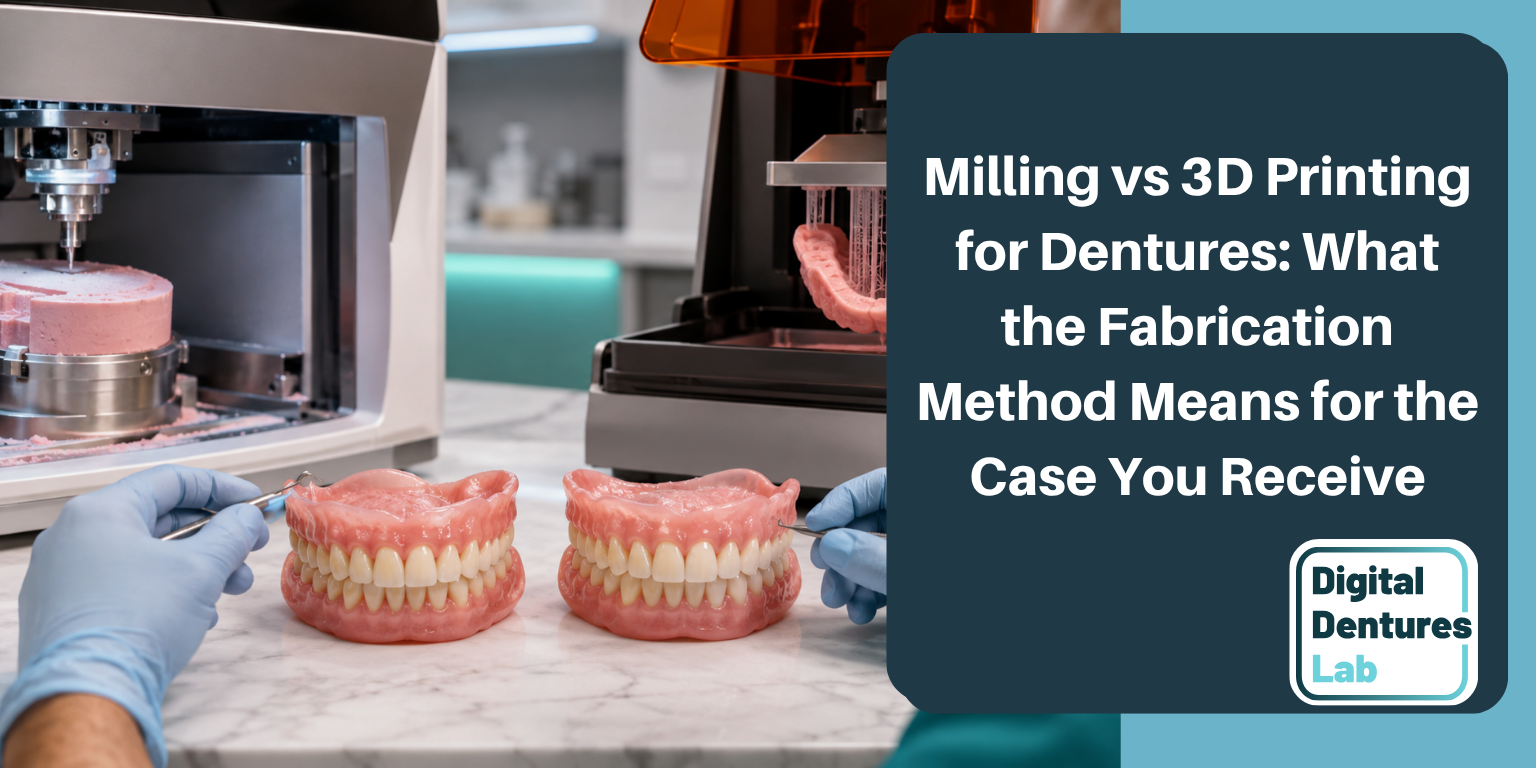
Once the design is approved, the denture is fabricated using automated milling or 3D printing systems with FDA- and ADA-compliant materials manufactured under U.S. quality controls. This digital approach enables greater control over fit, occlusal fit, and overall design accuracy.
Digital impressions and software-driven design reduce variability, making it easier for labs to deliver consistent results across cases.
Traditional dentures are produced through a manual workflow that relies on physical impressions, stone models, wax try-ins, and technician adjustments. Each step introduces opportunities for distortion or inconsistency.
While widely used in the past, traditional workflows often involve:
These challenges can impact both chairside efficiency and lab turnaround times.
When comparing the accuracy of digital dentures vs traditional dentures, digital workflows provide a clear advantage. Digital scanning captures highly accurate data, while CAD-based design ensures consistent tooth positioning and base adaptation.
This level of precision leads to:
Digital dentures simplify the production process for both clinics and labs. Fewer appointments are required because design changes can be made digitally without restarting the case.
Digital workflows also enable cost reduction through automation while maintaining U.S. material standards:
Digital dentures support a fast turnaround time by eliminating many delays found in traditional workflows. Automation shortens production cycles by removing steps such as model shipping, manual wax-ups, and repeated adjustments.
As a result, practices benefit from:
When evaluating the cost of digital dentures, it is essential to look beyond individual case pricing. Digital workflows reduce overall costs by:
These efficiencies enable many labs to offer significantly lower-cost digital denture options, comparable to offshore pricing, while maintaining consistent quality using FDA- and ADA-compliant materials. For practices, this translates into better value and improved operational efficiency.
Digital dentures deliver advantages for both clinical teams and patients, including:
For practices managing higher volumes, digital dentures support standardization and scalability.
Traditional denture workflows often involve:
These limitations can increase overhead and slow down restorative workflows.
Digital dentures are well-suited for:
Digital files also make future replacements or remakes easier to manage.
Dental labs are increasingly adopting digital dentures to improve:
Digital workflows allow labs to support growing practices without compromising accuracy or turnaround time.
Digital dentures help practices reduce remakes, shorten production timelines, and maintain greater consistency across restorative cases. By using CAD/CAM-driven workflows, digital denture production minimizes variability and supports predictable outcomes from case to case.
At Digital Dentures Lab, our team specializes in digitally manufactured dentures that prioritize accuracy, scalability, and efficient production. With streamlined digital case intake and dependable turnaround times, the lab helps practices manage restorative workflows more effectively while maintaining affordable production standards. For more information, contact us today.
Digital dentures offer greater consistency and accuracy through digital scanning and CAD-based design.
Digital workflows typically reduce turnaround time compared to traditional fabrication methods.
Improved fit and precision often result in better comfort and fewer post-delivery adjustments.
Yes. Stored digital files enable faster, more accurate replacements.
Durability depends on material selection, but digital workflows ensure consistent fabrication standards.

Get updates, case details, and lab innovations to support your practice and patient outcomes.