



For many dental practices, denture cases are not difficult because the diagnosis is unclear. They become difficult because the workflow is unpredictable. A distorted impression, unclear bite record, delayed lab communication, or post-delivery remake can turn one denture case into several extra appointments. Over time, those small workflow problems affect chair time, scheduling capacity, patient satisfaction, and the overall efficiency of the office.
That is why more restorative practices, prosthodontic offices, and high-volume denture providers are looking at digital dentures as a clinical efficiency tool, not just a newer way to fabricate prosthetics. By combining digital impressions, CAD/CAM denture design, 3D printing or milling, and more connected lab communication, digital denture workflows can help dental teams move cases forward with fewer delays and more predictable results.
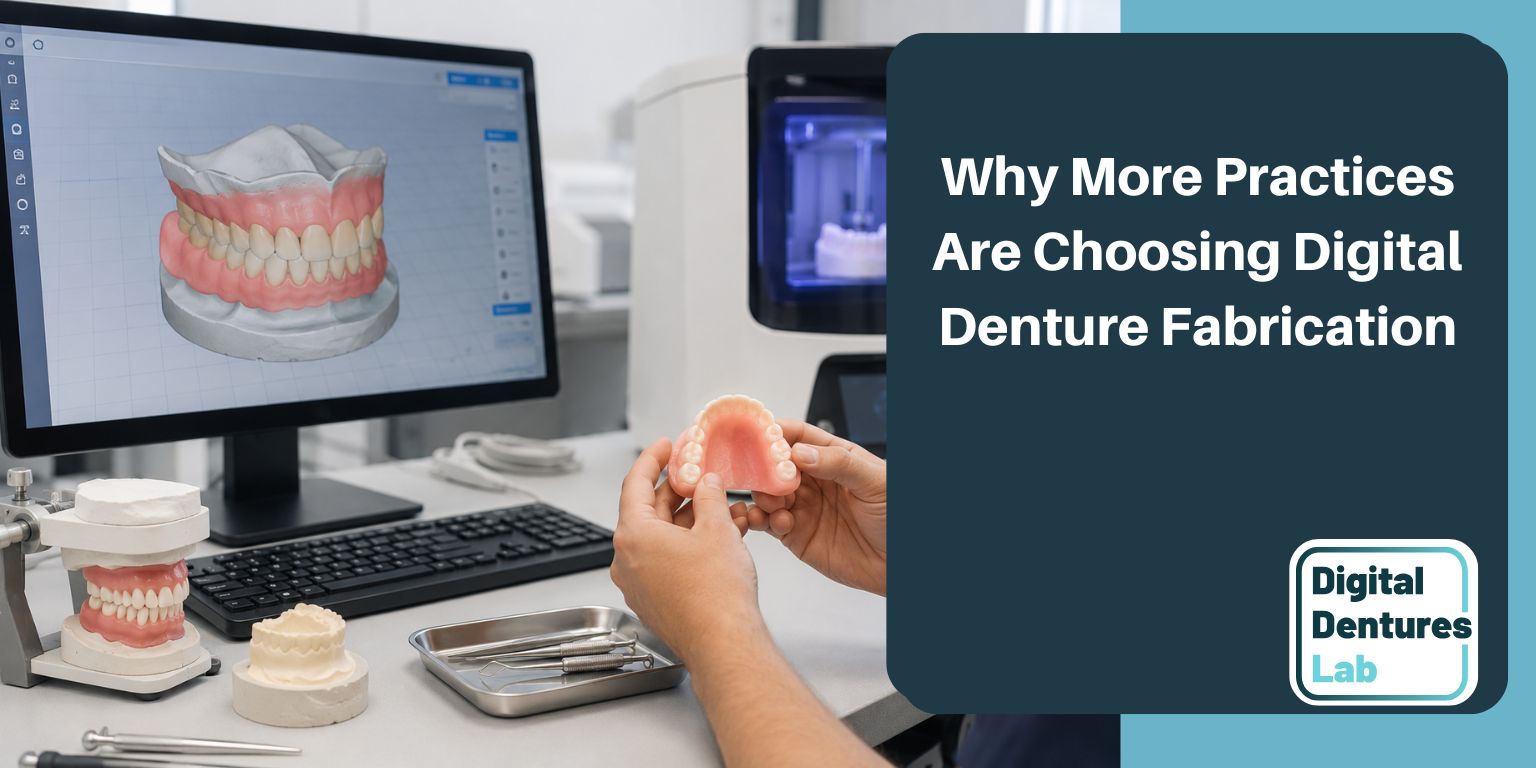
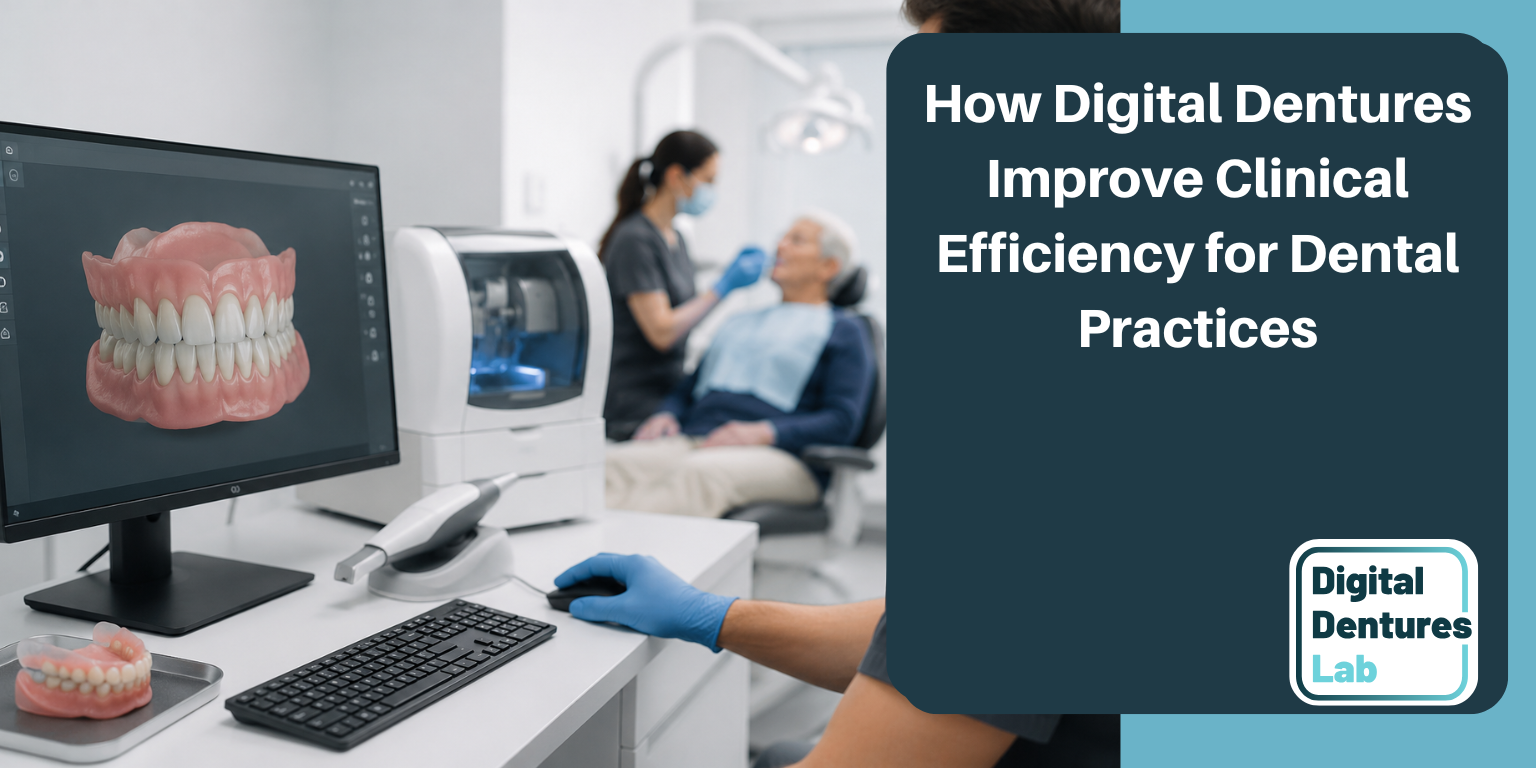
A digital denture workflow uses digital dentistry solutions to capture, design, manufacture, store, and reproduce denture cases with less dependence on physical models and manual transfer steps. In most practices, the process may include intraoral scanning, uploaded records, CAD/CAM denture fabrication, digital design approval, 3D printing, or milling.
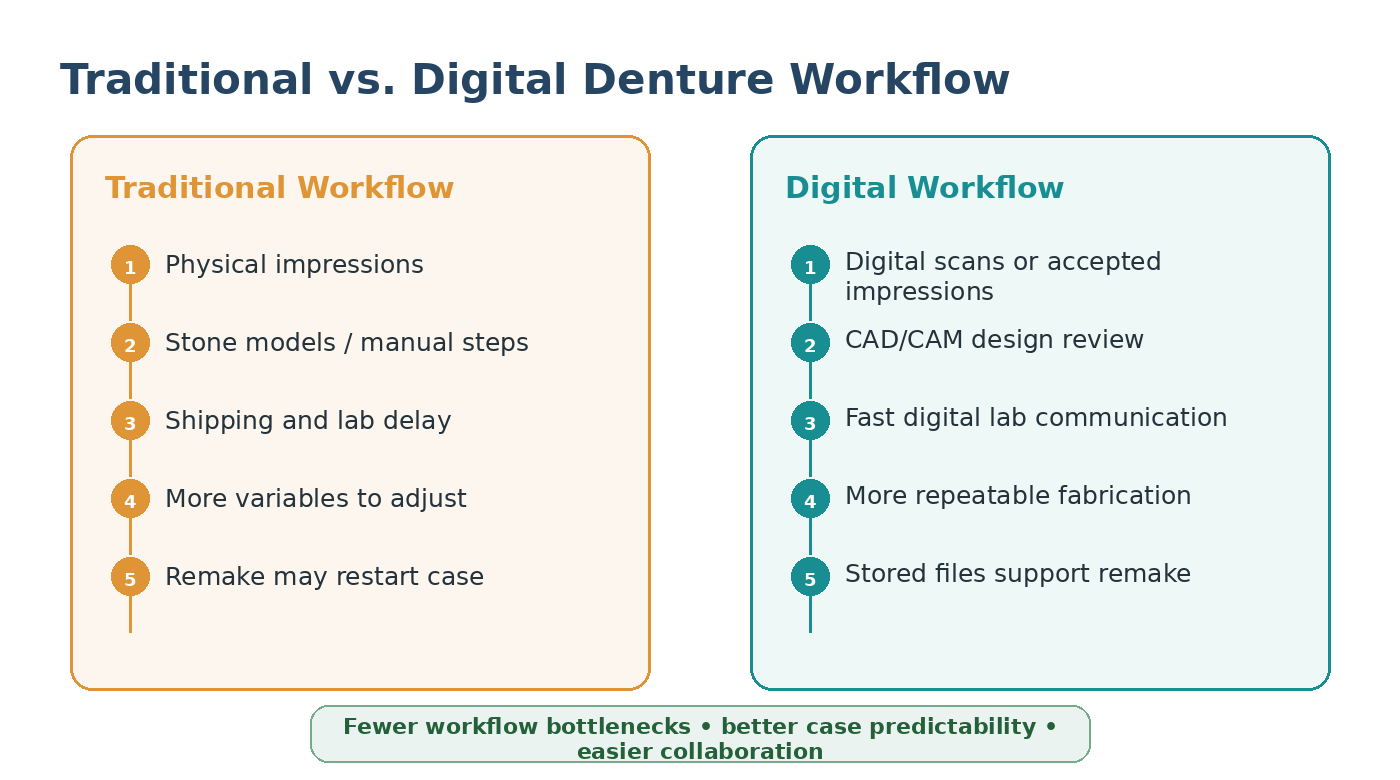
The value is not only in the technology itself. The practical value is that each step creates a cleaner handoff between the dental office and the lab. Digital impressions can be transferred quickly. CAD/CAM design makes the prosthetic plan easier to review. Manufacturing becomes more repeatable. Case data can be stored for future remake or replacement needs. That combination can improve denture workflow efficiency from the first appointment through final delivery.
Digital workflows reduce several variables that can slow conventional denture cases, including physical shipping, model distortion, manual communication gaps, and remake delays.
Traditional denture fabrication has served patients for decades, but it depends on physical impressions, stone models, wax try-ins, acrylic processing, and several manual transfer points. Each step can introduce small variations. In a straightforward case, those variations may be manageable. In a busy practice with multiple denture cases, they can create repeated adjustments, delayed deliveries, and schedule strain.
Digital impressions for dentures and CAD/CAM denture fabrication help reduce some of those variables. Research comparing conventionally and digitally fabricated complete dentures has reported potential advantages related to fewer visits, reduced chair time, and improved laboratory efficiency in selected workflows. Digital dentures still require careful records, clinical judgment, and case verification, but the workflow gives the practice and lab a more consistent case foundation.
Denture cases touch almost every part of the practice workflow. The dentist needs accurate records and enough clinical confidence to move forward. The assistant needs a process that does not require excessive retakes. The front desk needs a realistic appointment sequence. The patient wants fewer visits, a comfortable prosthesis, and a clear timeline. The lab needs complete records, clean communication, and enough detail to fabricate accurately.
When the workflow is inconsistent, the case becomes harder for everyone. One inaccurate impression can lead to a new appointment. One unclear bite record can delay design. One remake can occupy chair time that could have been used for diagnosis, treatment planning, or production. Clinical efficiency matters because it protects both the patient experience and the business side of the practice.
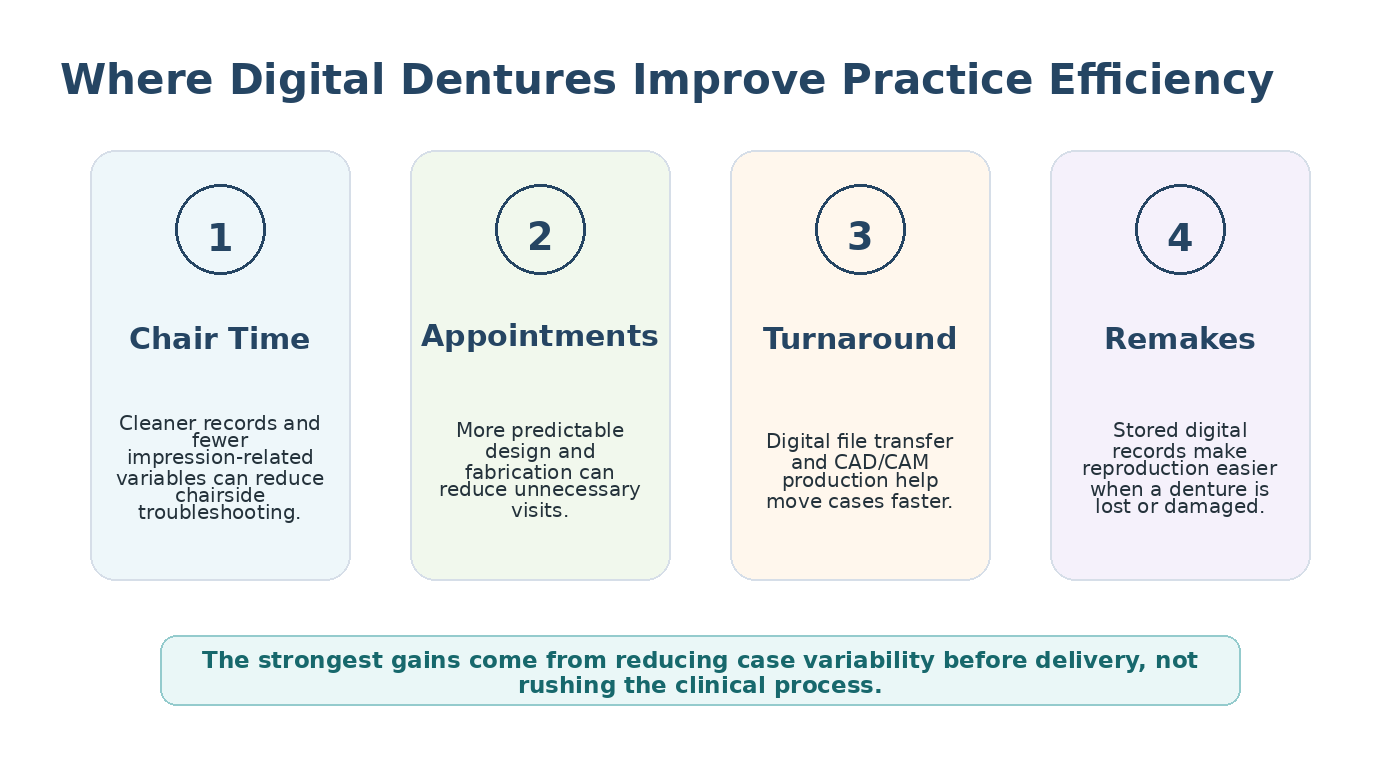
Digital dentures improve efficiency by reducing variability in the steps that usually create delays: records, appointments, turnaround, and remakes.
Digital scans can reduce the need for messy impression materials and may create a cleaner starting point for denture fabrication. For patients with gag reflexes, limited tolerance, or anxiety around impressions, this can also make the appointment more manageable. For the dental team, the benefit is practical: fewer impression-related variables can mean less time spent correcting preventable problems later.
This does not mean every denture case becomes simple. Border molding, tissue management, vertical dimension, esthetics, and occlusion still require clinical judgment. But a more accurate record capture process can reduce the number of avoidable complications that consume chair time after delivery.
Traditional denture workflows often involve several appointments before final delivery. Digital denture workflows can help consolidate parts of that process when the case is appropriate and the practice has a clear lab protocol. Digital records, design previews, and more efficient lab communication can reduce back-and-forth steps that do not add clinical value.
That is especially important for older patients, medically complex patients, or patients who travel a long distance for care. Every avoided retake, remake, or avoidable adjustment helps the practice protect schedule capacity while improving the patient experience.
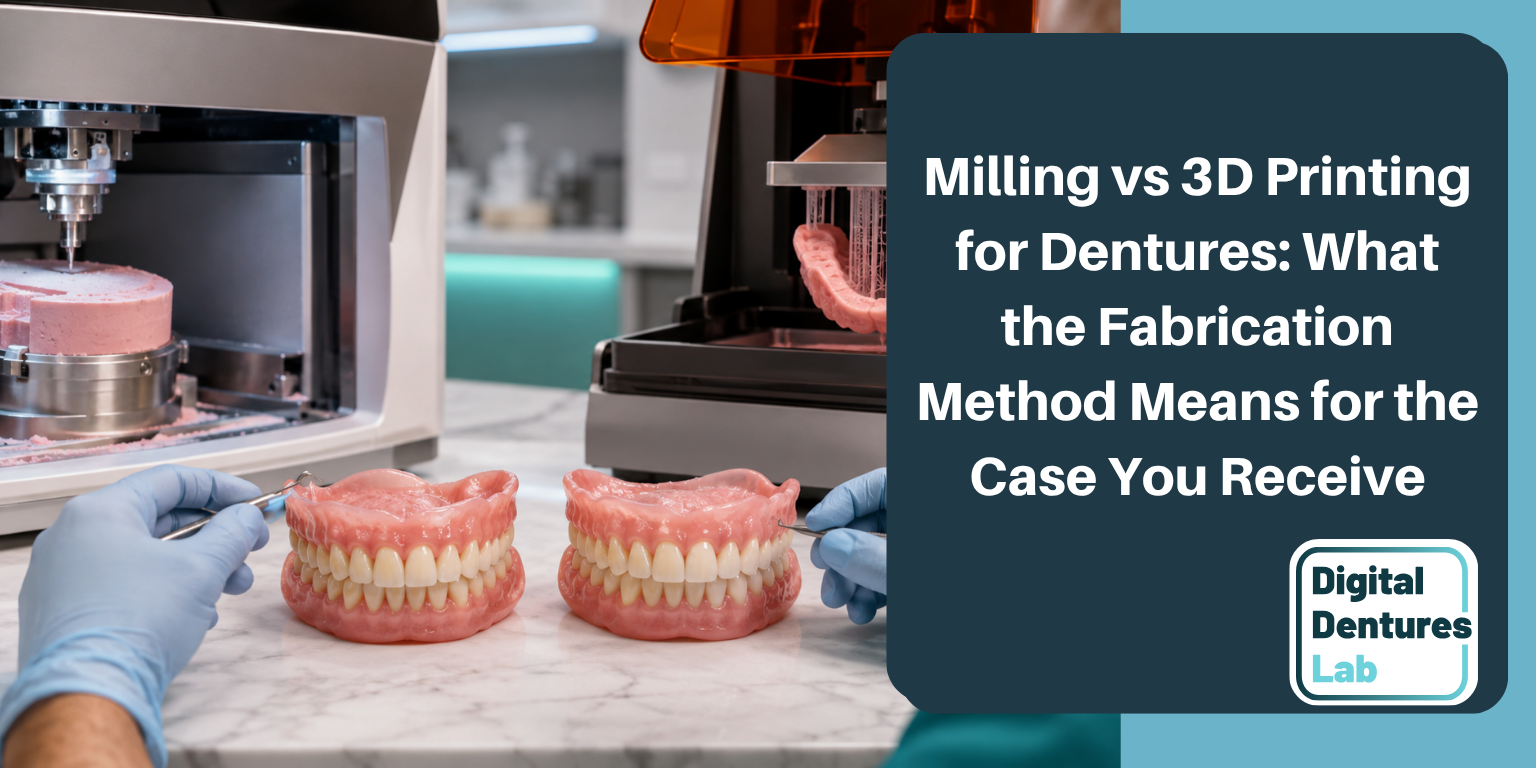
CAD/CAM denture fabrication gives the lab a more standardized production environment. Digital design, milling, and printing workflows can reduce some of the variability associated with traditional manual fabrication. A systematic review on CAD/CAM complete dentures found that this area continues to be evaluated across patient- and clinician-reported outcomes, which reinforces the need to frame digital dentures as a workflow advantage while avoiding overstatement.
For practices that handle a steady volume of full dentures, partial dentures, implant-supported dentures, or immediate dentures, that consistency matters. It helps the team know what to expect from the lab and helps patients receive a prosthesis that is closer to the intended result from the beginning.
Digital file transfer removes many of the delays associated with shipping physical materials. Once records are captured and submitted, the lab can review the case, ask questions, and begin the design process sooner. Clinical workflow literature has described CAD/CAM-supported digital workflows as useful for more prompt prosthesis delivery when time constraints matter.
For a busy dental office, faster turnaround is not only about speed. It is about schedule reliability. When the lab process is more predictable, the practice can give patients clearer expectations and reduce the disruption caused by delayed cases.
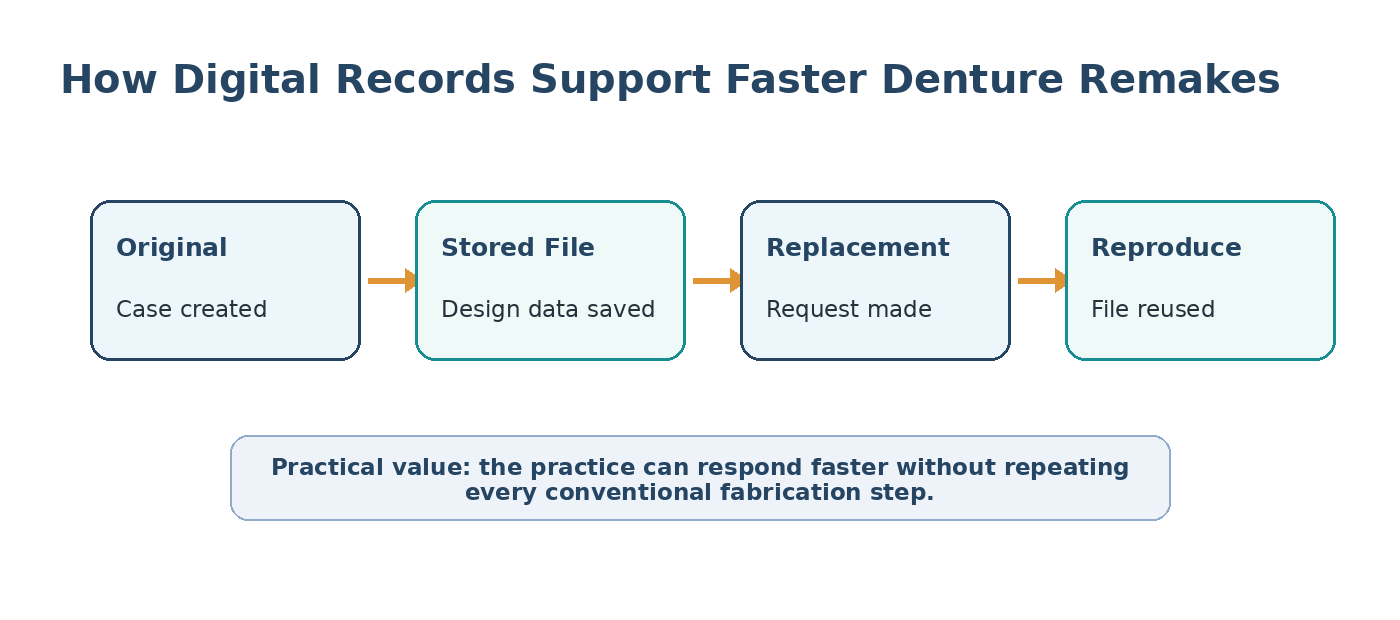
Digital record storage is one of the clearest operational advantages of digital dentures. If a patient loses, breaks, or wears out a prosthesis, the stored denture file can support faster reproduction when the existing design is still clinically appropriate. Instead of restarting the entire conventional process, the practice and lab can often work from the previous digital record.
Stored digital denture files can make future replacements more efficient when the original design remains clinically suitable.
Digital denture workflows also improve communication. Instead of relying only on physical models, written notes, or delayed phone calls, the practice can share scans, photos, prescriptions, design preferences, and case instructions through a more connected process. The lab can review the case earlier, identify missing information sooner, and return design questions before the case stalls.
This is where the lab partner becomes especially important. A digital workflow is only as useful as the communication system behind it. The right digital denture lab should help practices submit complete cases, clarify design preferences, review approvals efficiently, and resolve questions before fabrication.
Beyond the clinical appointment sequence, digital dentures can support broader practice efficiency. They may help the team reduce remakes, control production costs, minimize material waste, and create a more modern patient experience. A recent cost-efficiency review also highlights why time and cost factors are central to the digital-versus-conventional denture discussion.
For dental practices, this can become a competitive advantage. Patients increasingly expect healthcare experiences to be more convenient, coordinated, and predictable. A practice that can explain how digital dentures improve fit, turnaround, and replacement options has a stronger value message than a practice that describes dentures only as a conventional removable appliance.
A practice does not need to overhaul every system at once to benefit from digital dentures. A practical first step is to evaluate where denture cases are currently slowing down the schedule. Common warning signs include frequent impression retakes, long turnaround times, repeated post-delivery adjustments, inconsistent lab communication, high remake rates, or difficulty replacing lost dentures quickly.
If those problems are common, it may be time to work with a digital denture lab that can support scan-based workflows, conventional impression options when needed, design approvals, CAD/CAM fabrication, and predictable delivery protocols.
The technology matters, but the partner matters just as much. When evaluating a digital denture lab, dental offices should look for scanner compatibility, responsive communication, clear case submission instructions, consistent turnaround times, quality assurance processes, and experience with complex removable and implant-supported cases.
Digital Dentures Lab supports dental practices with full digital dentures, partial dentures, implant solutions, clear dental lab pricing, and a workflow designed for modern restorative teams. For practices that want to reduce chair time, improve case predictability, and keep denture cases moving, the right lab relationship can make digital adoption easier.
Digital dentures help dental practices move away from unpredictable, model-heavy workflows and toward a more efficient, connected, and reproducible restorative process. With digital impressions, CAD/CAM denture fabrication, 3D printing or milling, and stored case records, dental teams can reduce workflow bottlenecks and deliver a better experience for patients.
At Digital Dentures Lab, we help practices streamline denture cases with technology-driven fabrication, responsive support, and practical digital workflows built around the needs of dental offices. Whether your team is already using intraoral scans or is beginning the transition from traditional impressions, our lab can help support a smoother process from case submission to delivery.
Contact Digital Dentures Lab to learn how our digital denture solutions can support your practice workflow.
Digital dentures improve clinical efficiency by reducing manual transfer steps, supporting faster lab communication, improving record accuracy, and making case reproduction easier when a denture needs to be replaced.
Digital workflows can reduce some of the variables that contribute to remakes, especially impression distortion, incomplete communication, and fabrication inconsistency. Clinical records and case selection still remain important.
Not always. Many digital labs accept intraoral scans, but some also accept traditional impressions or models and convert them into a digital design workflow. The best option depends on the practice’s equipment and the lab’s submission process.
Yes. Digital workflows can be used for many full denture and partial denture cases, as well as selected implant-supported denture workflows. Complex cases may still require additional clinical planning and verification.
Stored files can support faster replacement or reproduction if a denture is lost, damaged, or needs to be remade, provided the original design still fits the patient’s current oral condition.

Get updates, case details, and lab innovations to support your practice and patient outcomes.