



Precision plays a critical role in the long-term success of dental implant restorations. Accurate positioning, proper fit, and consistent manufacturing standards directly influence function, stability, and overall case predictability. As implant dentistry continues to advance, digital workflows have become an essential part of delivering reliable outcomes.
Digital technology allows dental labs to support implant cases with greater accuracy, faster turnaround times, and improved cost efficiency driven by automation, reducing labor costs without lowering material or regulatory standards. By replacing manual fabrication steps with data-driven digital processes, modern dental labs help practices achieve predictable results while maintaining operational consistency.
Precision dental implants are fundamental to achieving optimal clinical outcomes. Even minor deviations in fit or alignment can affect occlusal forces, load distribution, and soft-tissue response over time. Poorly fitted implant restorations may result in:
Dental labs play a vital role in translating clinical data into accurately designed and manufactured implant restorations. Precision at the lab level supports long-term implant success and reduces complications after delivery.
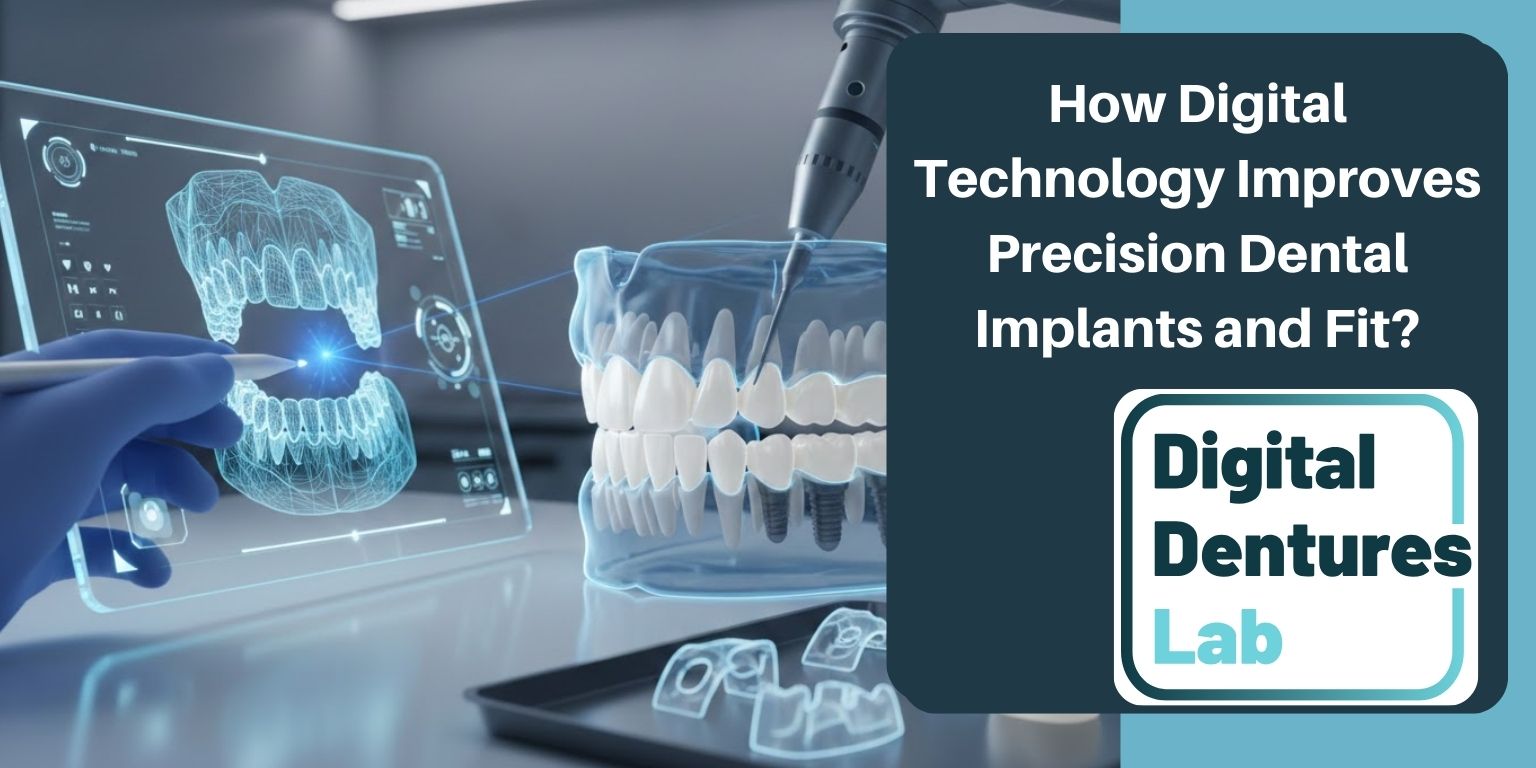
A digital dental implant workflow integrates multiple digital tools to plan, design, and manufacture implant restorations with high accuracy. This workflow typically includes:
A digital dental lab uses these technologies to create implant restorations that are consistently accurate and repeatable across cases. This integration improves communication between clinics and labs while reducing manual interpretation errors.
Challenges with Traditional Implant Fabrication
Traditional implant workflows often rely on manual impressions, physical models, and analog fabrication techniques. These methods introduce variability at multiple stages, including:
Such challenges can lead to increased remakes, extended turnaround times, and unpredictable results.
Digital implant technology shifts the workflow to a data-driven model, improving accuracy and consistency while enabling lower-cost production through efficient CAD/CAM processes. Key advantages include:
Digital workflows also support better collaboration between clinics and labs, resulting in smoother case progression.
Digital implant cases begin with detailed data capture using intraoral scanners and CBCT imaging. These tools provide accurate representations of:
High-quality data ensures a reliable foundation for precise implant planning and restoration design.
Using advanced CAD software, implant crowns and abutments are designed to match clinical requirements. Digital planning allows technicians to optimize:
Design adjustments can be made efficiently without restarting the case, improving workflow flexibility.
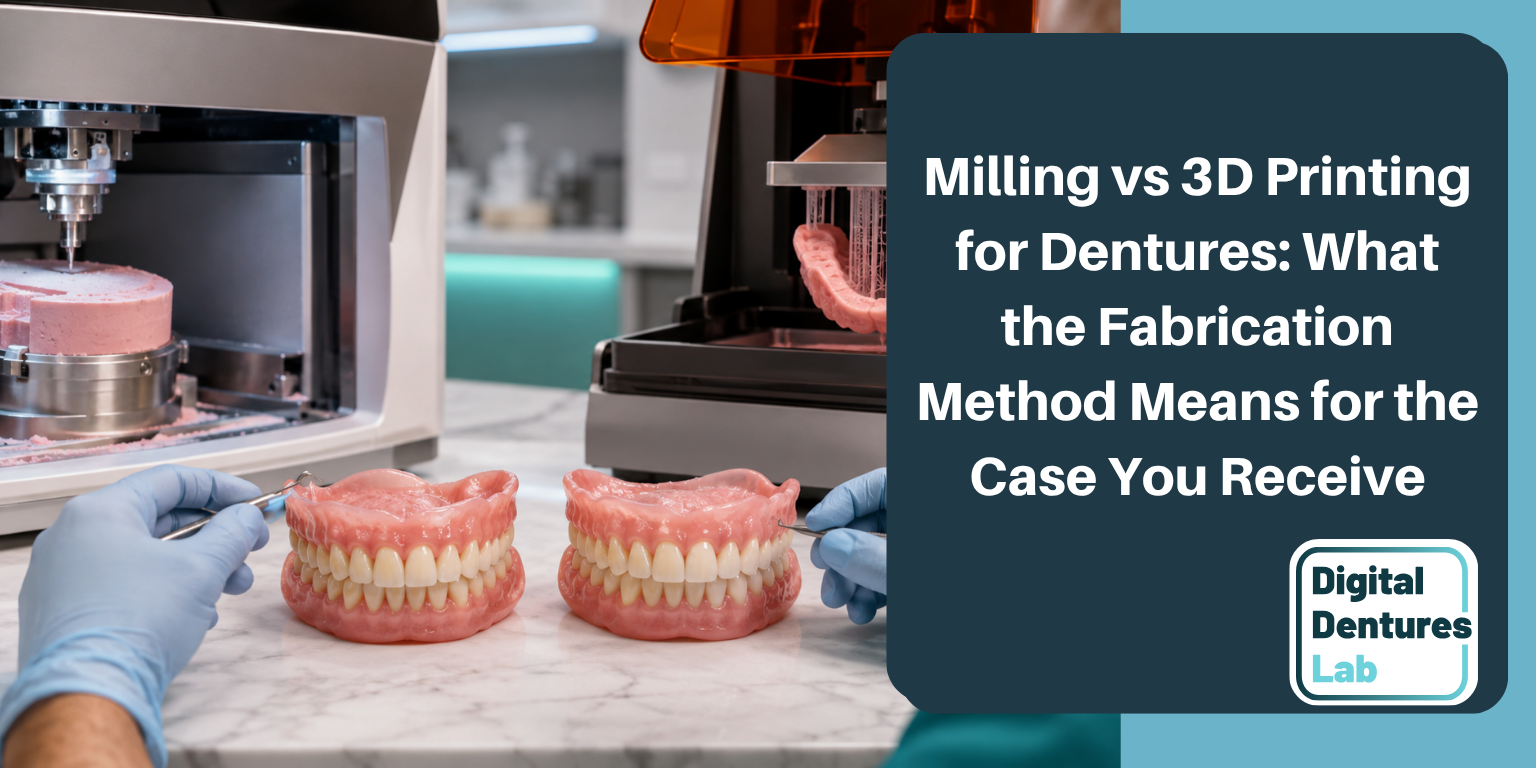
Once designs are approved, CAD/CAM systems are used to manufacture implant crowns and abutments. Milling and 3D printing provide:
Automated manufacturing reduces variability and supports high-volume production.
Digital workflows include built-in quality control checks before delivery. Digital verification helps ensure restorations meet design specifications, resulting in:
CAD/CAM systems enable micron-level precision that is difficult to achieve with traditional methods. Digital implant workflows improve:
These improvements contribute to better long-term implant stability and predictable restorative outcomes.
Digital workflows improve cost efficiency by:
These efficiencies allow dental labs to offer affordable implant restorations, competitive with offshore pricing, while maintaining U.S.-based quality controls and FDA- and ADA-compliant materials. Practices benefit from improved value and more controlled production costs.
Partnering with a digital dental lab offers several advantages, including:
Digital labs are better equipped to support increasing implant volumes without compromising precision or turnaround time.
Digital workflows reduce turnaround time by eliminating many manual steps found in traditional fabrication. Benefits include:
This allows practices to manage schedules more effectively and maintain steady case flow.
Digital technology has changed how dental implant restorations are planned, designed, and manufactured. When digital scanning, accurate implant planning, and CAD CAM production work together, dental labs can achieve better fit, higher accuracy, and more predictable implant outcomes.
At Digital Dentures Lab, our team supports implant restorations with digitally manufactured solutions that focus on precision, efficiency, and cost-effective production. If you want to improve your implant restorative process using a digital workflow, contact us today.
A digital dental lab uses digital planning and CAD/CAM manufacturing to produce implant restorations with high accuracy and consistency.
CAD/CAM systems enable precise design and automated production, improving margin accuracy and occlusal alignment.
Yes. Improved accuracy often results in fewer post-delivery adjustments.
Digital workflows typically reduce turnaround time compared to traditional fabrication methods.
Automation and reduced remakes help make digital implant restorations cost-efficient for dental practices.

Get updates, case details, and lab innovations to support your practice and patient outcomes.