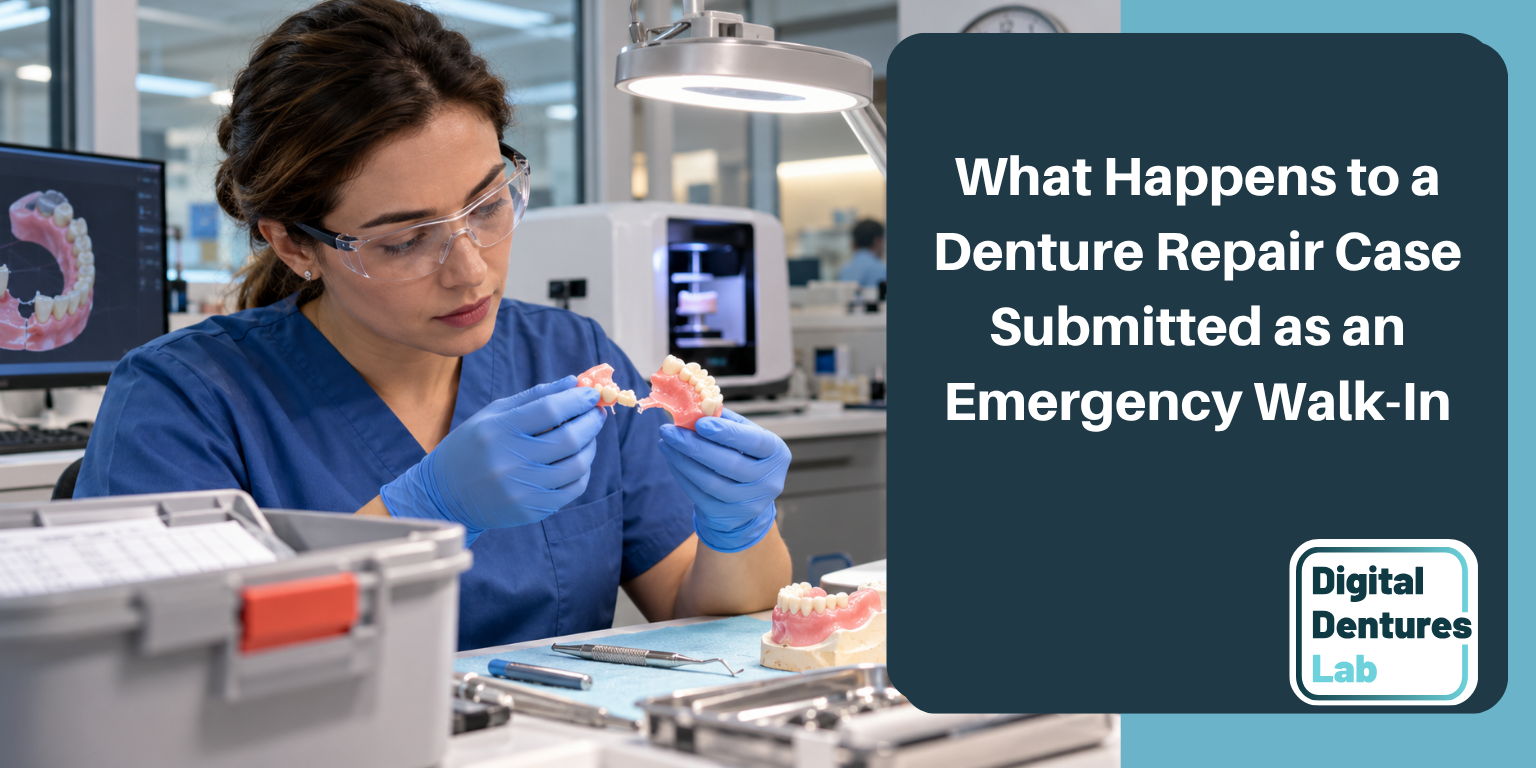


Traditional dentures can still produce excellent clinical results. The challenge is that conventional denture workflows depend on several manual steps, and each step can introduce small variables that affect the final case. A distorted impression, unclear bite record, delayed lab question, or post-delivery adjustment can turn one denture case into multiple extra appointments.
For dental practices, those extra steps affect more than one restoration. They influence chair time, scheduling, remake risk, patient confidence, and communication between the office and the laboratory. This is why many practices are evaluating digital denture workflows as a way to make removable cases more predictable.
Digital workflows do not replace sound clinical judgment. They support it by improving how records are captured, transferred, designed, manufactured, stored, and reused. When the practice and lab are working from cleaner records and a shared digital process, many common denture problems become easier to manage before they disrupt the schedule.
Clinical literature on CAD/CAM dentures has described advantages that include reduced clinical chair time, fewer visits, digital archiving, and improved retention compared with conventional approaches. Research on CAD/CAM versus conventional complete dentures supports the broader shift toward digital denture fabrication, while still recognizing that case selection and clinical records remain important.
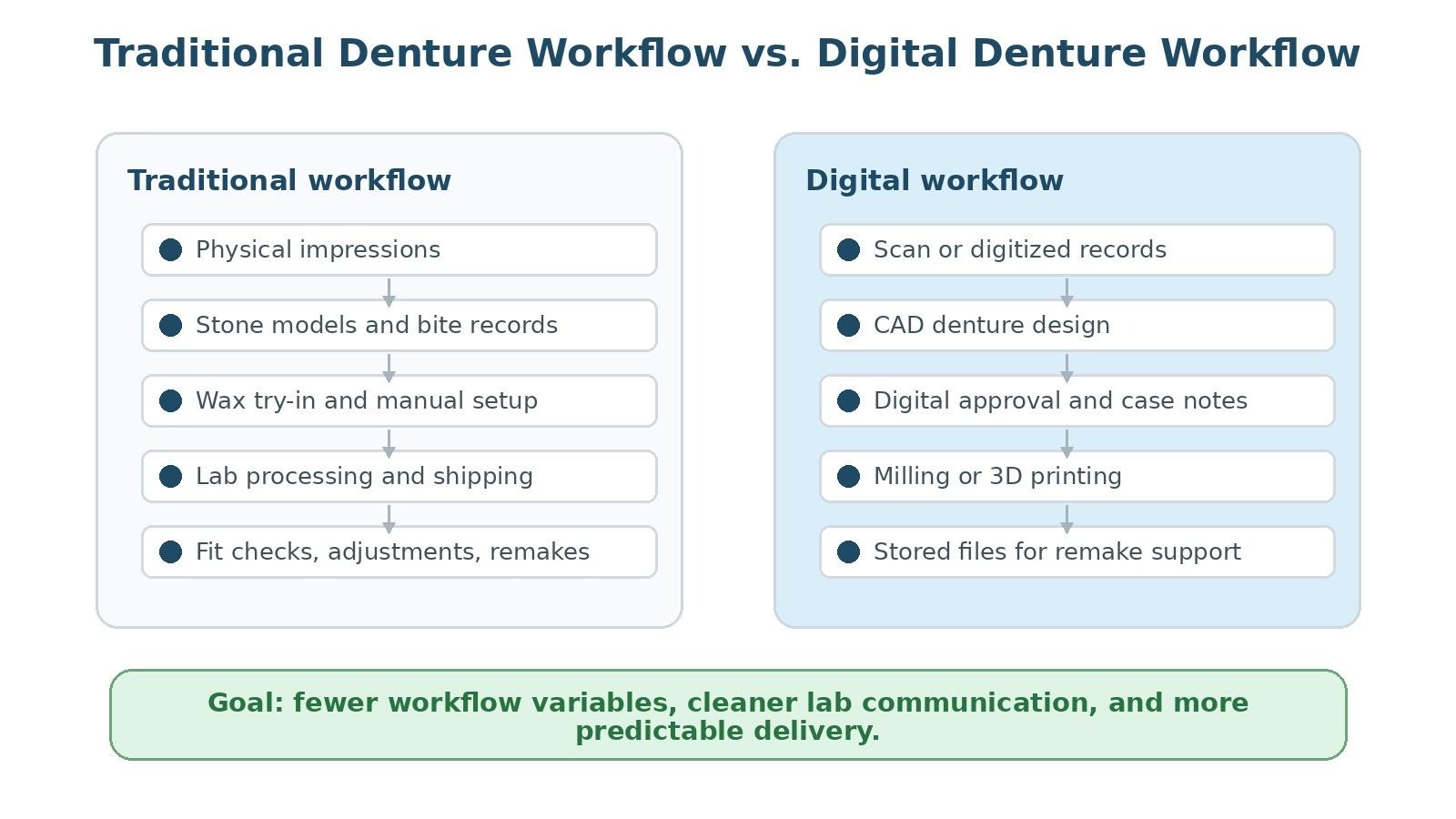
A conventional denture workflow usually begins with physical impressions, bite registration, stone models, wax try-ins, laboratory processing, delivery, and post-delivery adjustments. Every stage has a clinical purpose, but the process depends on the accurate transfer of information from one step to the next.
If an impression pulls, a model chips, a bite record is unclear, or a note is misunderstood, the error may not be obvious until the patient returns for a try-in or delivery. At that point, the practice may need additional chair time, the lab may need clarification, and the patient may lose confidence in the process.
This does not mean conventional dentures are poor treatment. It means that analog workflows can be harder to standardize, especially for busy practices managing multiple removable cases, implant cases, and urgent remake requests at the same time.
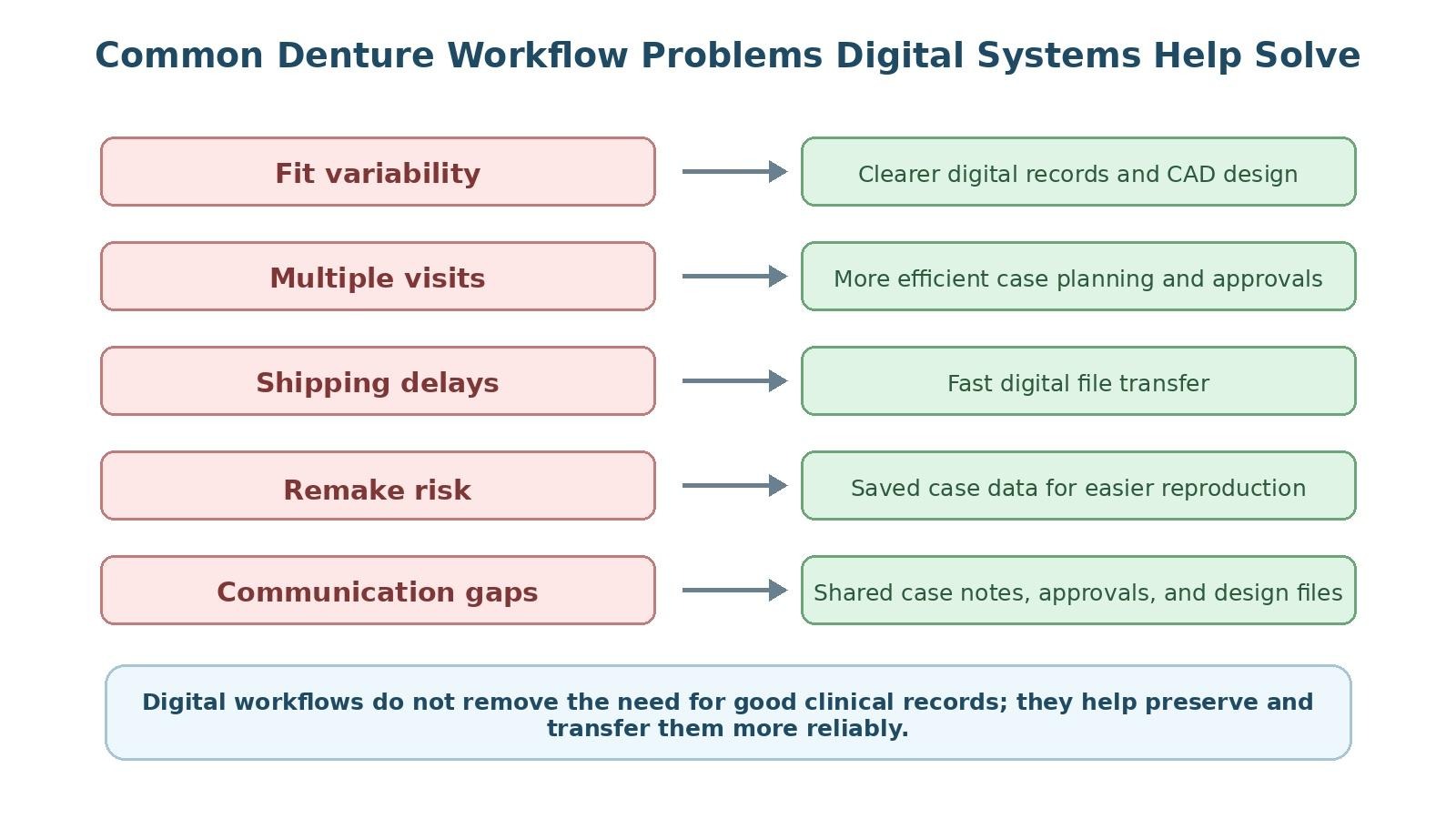
Poor fit is one of the most common denture workflow concerns. A denture may move during function, create pressure areas, irritate soft tissues, or require several rounds of adjustment. These issues may begin with an impression, a bite record, a processing change, or the natural limits of a challenging ridge anatomy.
Traditional workflows often require several appointments before final delivery. When a case needs an additional try-in, remake, reline, or adjustment visit, the impact is felt by the patient, the provider, the assistant, the front desk, and the schedule.
Physical models, shipping, manual processing, and case clarification can all slow completion. If the lab needs more information, the office may not discover the problem until the case has already been delayed.
Because conventional workflows rely on several manual steps, results may vary between cases. Even when the same dentist and lab technician are careful, impression materials, model handling, occlusal records, and processing steps can all affect the final prosthesis.
When a conventional denture is lost, broken, or no longer usable, reproducing it may require repeating records and starting much of the process again. That can be frustrating for patients and inefficient for the practice.
Visual placement: This workflow comparison helps readers see where digital records, CAD design, and automated production can reduce delays and case variability.
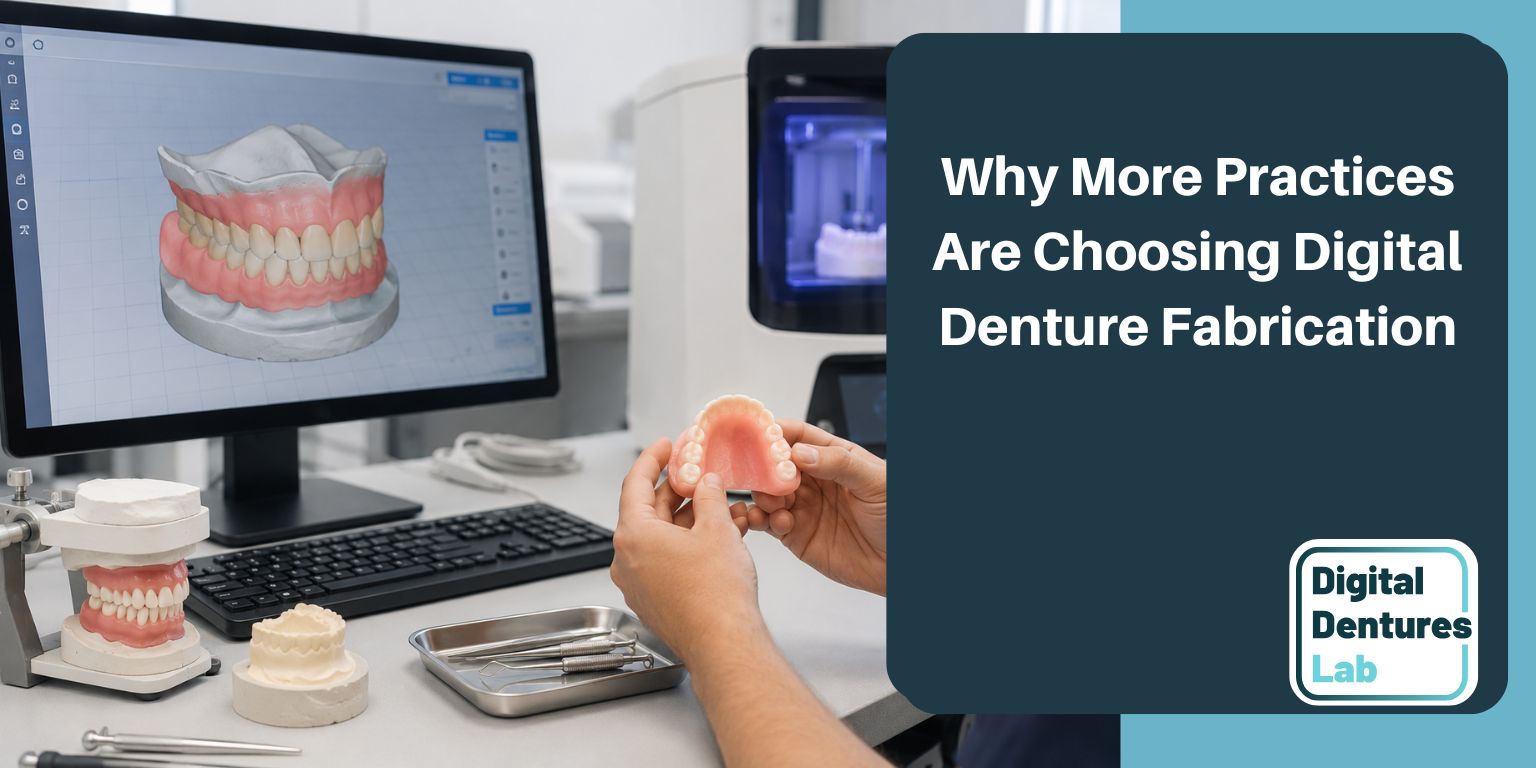
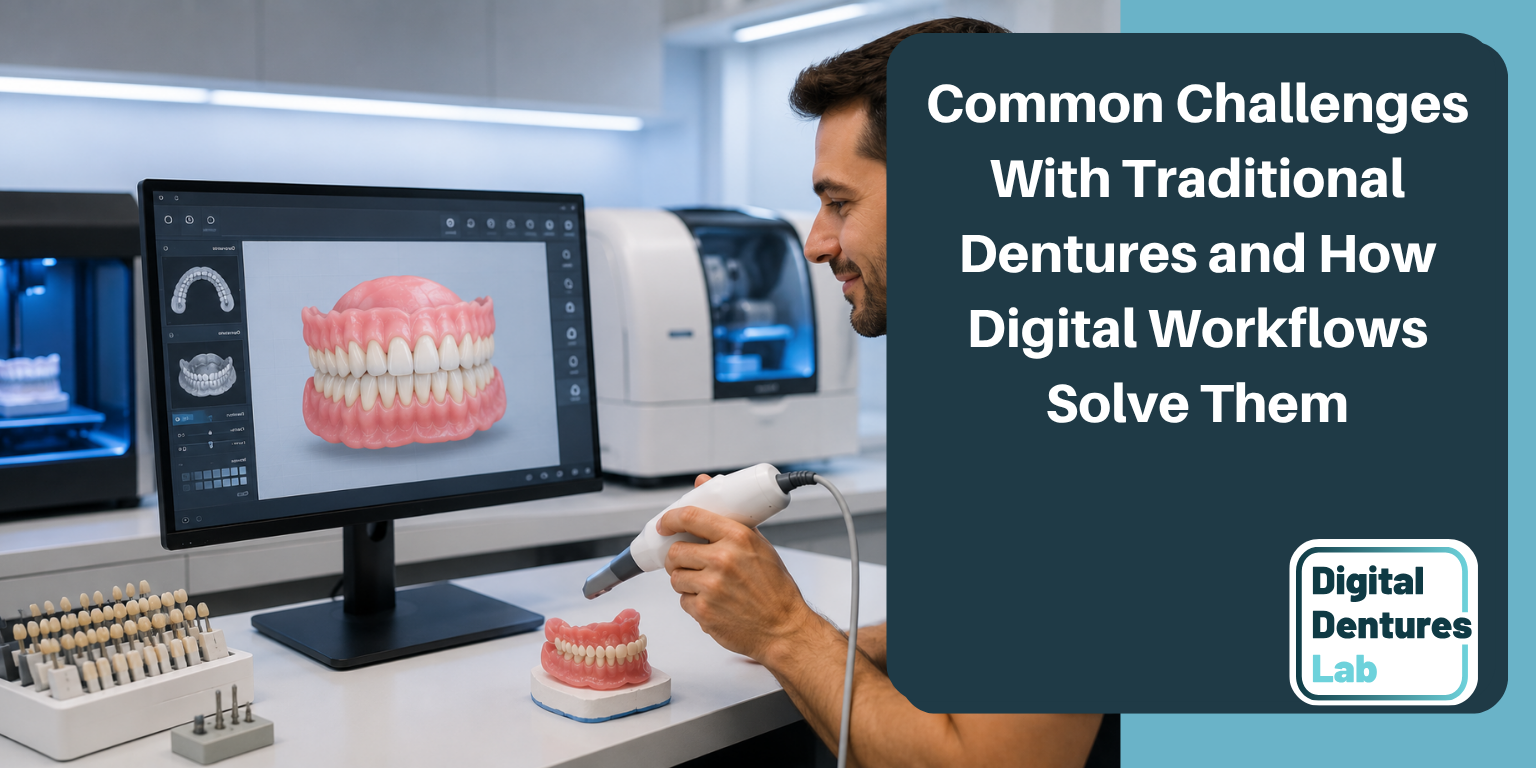
A digital denture workflow uses technology to capture, design, manufacture, communicate, and store case information more efficiently. Depending on the practice and case type, the workflow may begin with an intraoral scan, a scan of a physical impression or model, or a combination of conventional records that are digitized for design and production.
The key components usually include digital impressions or digitized records, CAD design software, CAM production through milling or 3D printing, and electronic case storage. Research on intraoral scanning in edentulous arches continues to evaluate clinical accuracy and indications, which is why digital adoption should be matched to the case rather than treated as one universal process. A systematic review on intraoral scanners for completely edentulous arches provides helpful context for dentists comparing scan-based and conventional record options.
For many practices, this hybrid flexibility is important. A good digital process should support the way the office actually works, not force every case into one record-capture method. A digital denture lab can help practices transition gradually by accepting digital files while still supporting conventional impressions when needed.
The most useful comparison is not simply analog versus digital. The practical question is how each workflow affects record quality, communication, production, and future remakes.
Digital records help reduce the information loss that can happen when impressions, models, prescriptions, and photos move through separate channels. When the lab can work from clearer case data, design questions can be addressed earlier instead of after a try-in or delivery problem appears.
Digital file transfer shortens the distance between the office and the laboratory. Instead of waiting for a model to arrive before the lab can review the case, the team can often evaluate records, clarify instructions, and begin design planning sooner.
One of the strongest advantages of digital denture workflows is the ability to store case data. If a denture is lost, damaged, or needs to be duplicated, the lab may be able to retrieve the digital file and reproduce the restoration more efficiently than starting from the beginning.
Digital workflows are not a guarantee that every case will be simple. Ridge anatomy, occlusion, patient expectations, material choice, and clinical records still matter. But when case data is more consistent and communication is clearer, many preventable remake causes can be reduced.
Patients may not think about CAD design or file transfer, but they notice the results of a more organized workflow: fewer delays, fewer unexpected visits, clearer expectations, and a better sense that the office and lab are coordinated.
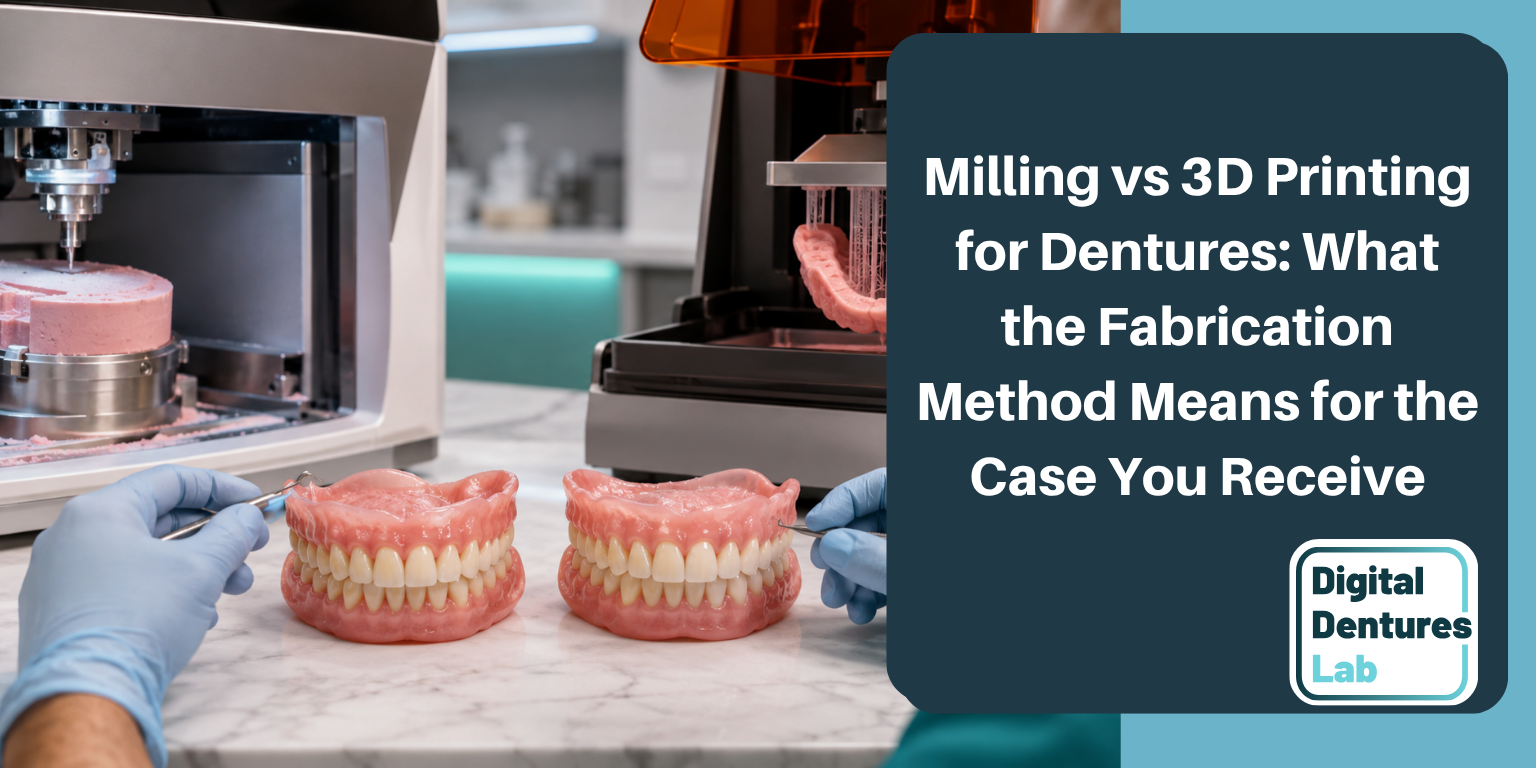
A review of 3D printed complete removable dental prostheses also reflects the growing role of printed materials and digital manufacturing in removable prosthodontics. The review on 3D printed complete removable dental prostheses is useful background for practices evaluating where printed and milled denture workflows may fit into their restorative systems.
Visual placement: Use this graphic after the main solution section to connect common traditional denture problems with practical digital workflow improvements.
For dental practices, the value of digital dentures is not limited to a single appliance. The larger benefit is workflow control. When records are cleaner, communication is faster, and case files are stored, the team can manage removable cases with fewer avoidable interruptions.
This can support scheduling efficiency, staff coordination, patient communication, and restorative production. Practices that handle a steady volume of complete denture, partial denture, implant overdenture, or remake cases may see the greatest operational benefit because even small improvements in each case can compound across the month.
Digital workflows can be especially valuable for full digital dentures, where accurate records, occlusal relationships, esthetic setup, and reproducibility all influence patient satisfaction and case efficiency.
Technology matters, but the lab partner matters just as much. A digital workflow can only improve efficiency when the laboratory has a clear submission process, reliable communication, consistent quality control, and experience with removable prosthetics.
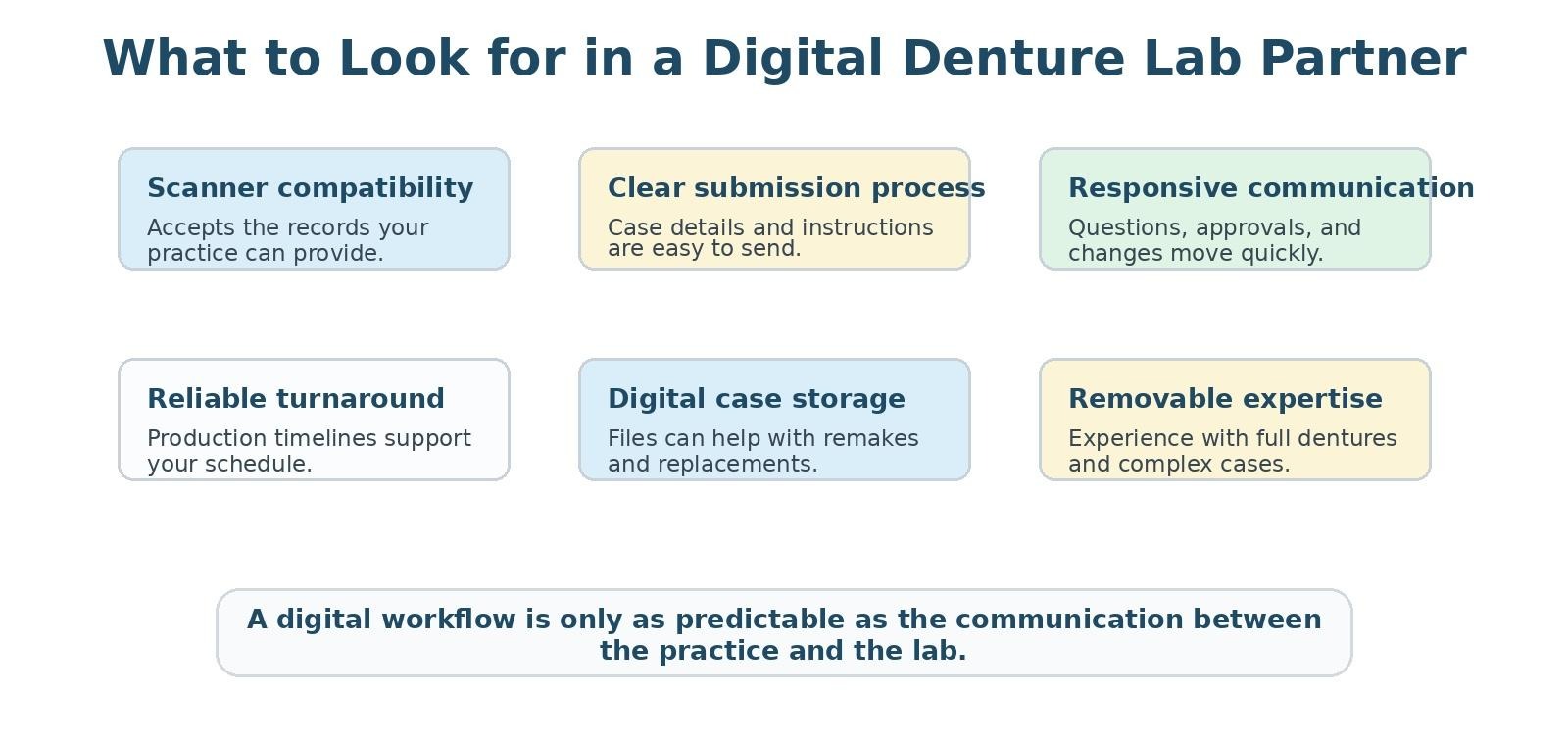
Before choosing a lab, practices should evaluate scanner compatibility, turnaround expectations, design approval processes, remake policies, shipping reliability, and how the lab handles cases that still require conventional impressions or hybrid workflows. The goal is not simply to find a lab with digital equipment. The goal is to find a lab that helps the practice keep cases moving.
Visual placement: This checklist works well before the final CTA because it helps dental teams evaluate the lab relationship, not just the technology.
Traditional denture workflows can still serve patients well, but they often create avoidable friction for busy dental teams. When fit problems, repeated adjustments, shipping delays, or remake requests become common, a more predictable digital workflow may help the practice protect chair time and improve the patient experience.
Digital Dentures Lab supports dental practices with technology-driven denture fabrication, responsive case communication, and practical workflows built around the needs of modern restorative teams. Whether your practice is already using intraoral scans or is beginning the transition from traditional impressions, our lab can help support a smoother process from case submission to delivery.
Contact Digital Dentures Lab to learn how our digital denture solutions can support your practice workflow.
Common challenges include poor fit, sore spots, instability, multiple visits, turnaround delays, inconsistent fabrication results, and difficulty reproducing lost or damaged dentures.
Digital workflows improve the way case records are captured, transferred, designed, and stored. This can help reduce variability and support more predictable fabrication, although accurate clinical records are still essential.
They can help reduce avoidable remakes by improving record quality, design consistency, lab communication, and reproducibility. Remake risk still depends on case complexity, clinical records, materials, and patient factors.
Not always. Some digital denture labs can work with intraoral scans, scanned conventional impressions, scanned models, or hybrid workflows. The best option depends on the case and the lab’s submission process.
Practices are adopting digital workflows to improve efficiency, reduce delays, support digital record storage, streamline lab communication, and provide a more predictable experience for both the dental team and the patient.

Get updates, case details, and lab innovations to support your practice and patient outcomes.