



It usually starts the same way.
A case doesn’t arrive when it’s supposed to. The patient gets rescheduled. The schedule shifts around it. Sometimes, more than once.
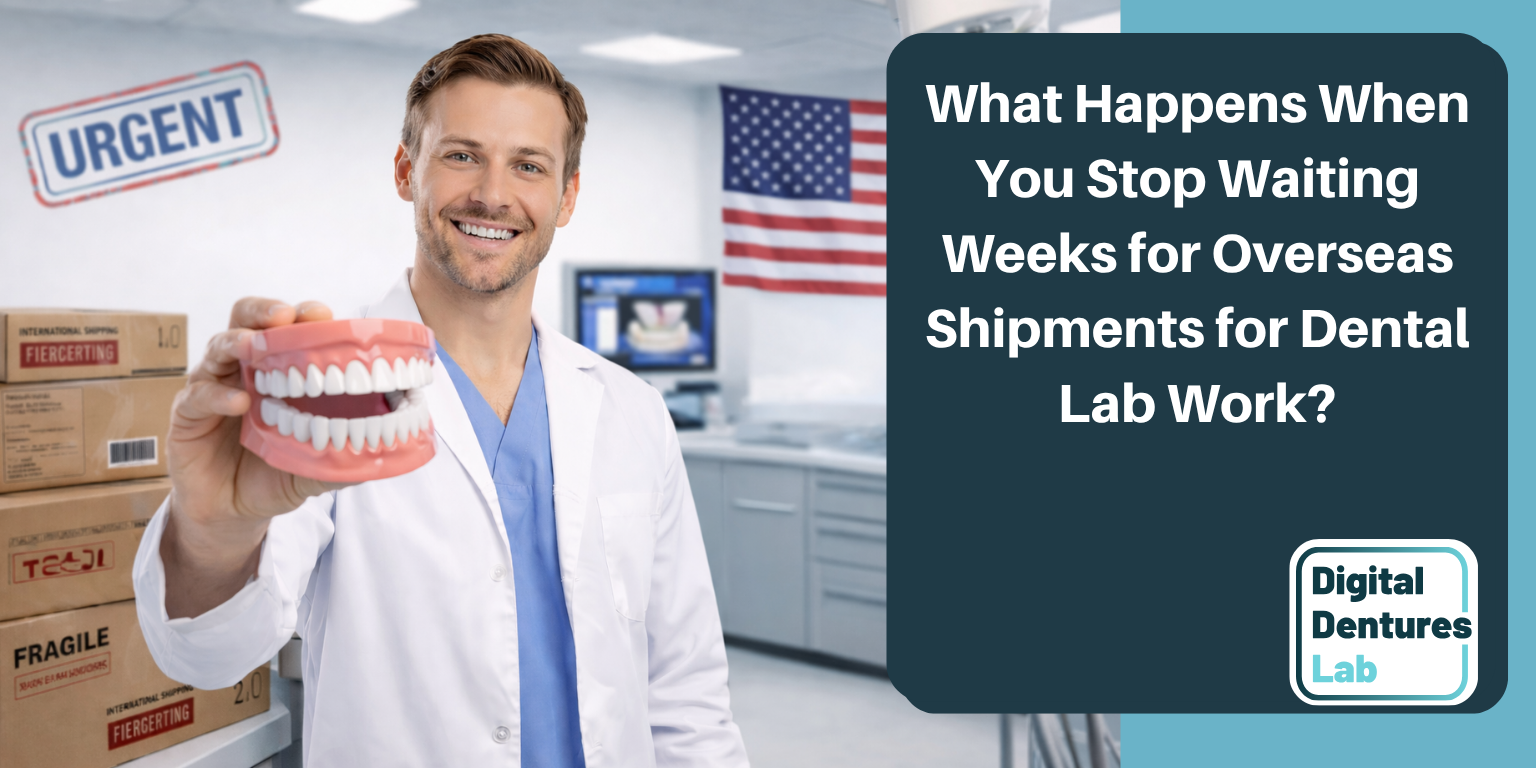
For a lot of practices, this isn’t an occasional issue—it’s part of the routine when lab work is coming from overseas. In many cases, those delays start to feel expected rather than the exception. Even when the work itself is fine, the turnaround is tied to shipping, customs, and back-and-forth communication that can stretch timelines longer than planned.
And once a case gets delayed, it doesn’t just affect that one appointment. It carries through the rest of the schedule—follow-ups get pushed, chair time gets used for adjustments, and the whole workflow becomes harder to predict.
So what actually changes when you take that delay out of the equation?
When lab work comes back on a consistent, shorter timeline, it’s not just about speed. It changes how cases move through the practice - from how appointments are scheduled to how many visits it takes to get to final.
When lab work is coming from overseas, the timeline is never just the lab time—it’s everything around it.
Even if the case is completed on schedule, you’re still dealing with shipping, customs, and the reality that any small correction adds another full cycle. What might have been a quick adjustment locally turns into another one to two weeks.
From a practice standpoint, that makes it difficult to plan cases with any real confidence.
Most of the time, communication is delayed simply because of time zones.
If something needs to be clarified - a margin, a bite issue, a design detail—it doesn’t get resolved in minutes. It can take a full day or more just to move the case forward.
That delay tends to show up later as well, especially when something isn’t quite right and needs to be adjusted.
The issue isn’t always that the work is poor—it’s that it’s inconsistent.
Differences in materials, fabrication processes, and oversight can lead to variations from case to case. And when something comes back slightly off, whether it’s occlusion, fit, or pressure areas, it often requires additional chair time to correct.
In some cases, it means a full remake - starting the process over again.
These delays don’t stay isolated to the lab - they show up in the schedule.
Over time, it becomes harder to keep cases moving efficiently, and the schedule starts to feel reactive instead of predictable.
For practices working within the U.S., the effects of delayed lab work don’t stay isolated to the case - they show up throughout the schedule.
When a case comes back late or needs additional adjustments, it usually means more visits to get to final. What should have been a straightforward delivery turns into multiple appointments to correct occlusion, relieve pressure areas, or refine the fit.
That extra chair time adds up quickly.
It also makes scheduling more difficult. When timelines aren’t predictable, it’s harder to block out cases efficiently. Appointments get moved, gaps open up in the schedule, and the day becomes more reactive than planned.
From the patient side, longer timelines can lead to hesitation or frustration, especially when treatment expectations are not being met, something the American Dental Association regularly addresses in its research and practice resources.
Over time, these small disruptions start to affect overall case flow:
It’s not just a timing issue - it changes how efficiently the entire practice runs.
When lab timelines are consistent, cases start to move differently through the practice.
Instead of building extra time into the schedule “just in case,” you can plan around a known turnaround. Many cases can be completed within the same week, or at least on a timeline you can rely on.
More importantly, it often reduces the number of visits needed to get to final. When things come back on time—and closer to where they should be clinically - you spend less time adjusting and more time completing the case.
From the patient’s perspective, the biggest difference is time.
Fewer weeks between appointments means fewer interruptions in treatment. Instead of stretching things out, cases move forward at a pace that feels more manageable and predictable.
That alone tends to improve how patients view the overall experience.
When you can tell a patient that treatment can be completed in a shorter, more defined timeframe, it removes a lot of hesitation.
Long, drawn-out timelines are often where patients start to second-guess moving forward. When that timeline is tighter and more predictable, it becomes easier for them to commit.
The biggest shift happens behind the scenes.
When turnaround times are reliable, your team spends less time tracking cases, following up on delays, and adjusting the schedule around missing work.
Cases move forward without constant interruptions, and the day-to-day flow of the practice becomes easier to manage.
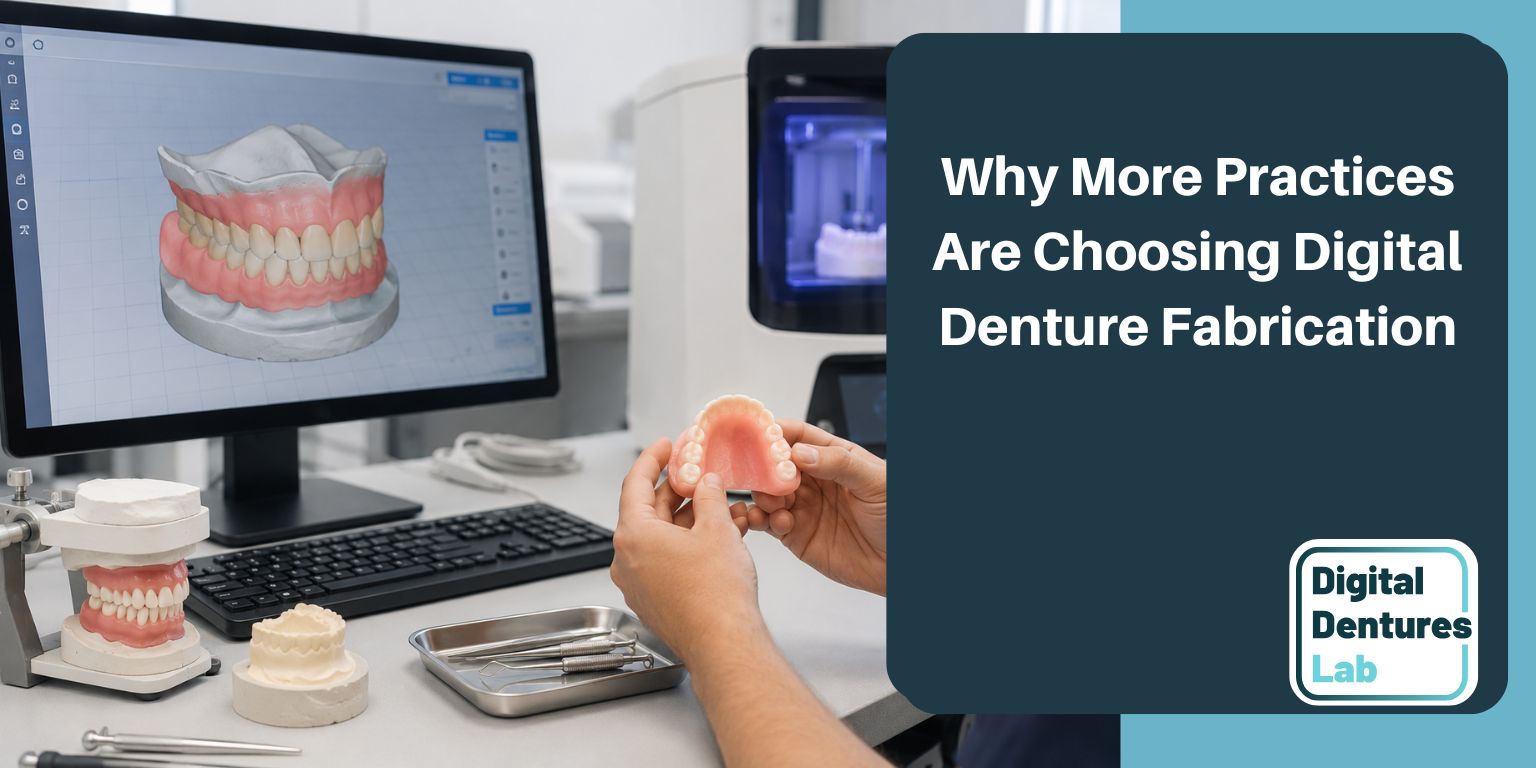
Digital dentures aren’t just a different way of making the same appliance - they change how the case moves from start to finish.
Instead of relying entirely on manual steps, the process begins with a digital scan or a model that’s converted into a digital file. From there, design and fabrication happen within a controlled workflow, which reduces variability from one step to the next.
That consistency usually shows up at delivery.
One of the biggest differences is how many steps are involved.
With traditional workflows, multiple try-ins and adjustments are often built into the process. With a digital approach, some of that back-and-forth can be reduced, depending on the case.
That doesn’t eliminate adjustments entirely, but it often means fewer appointments are needed to get to a stable, final result.
Because the case is designed digitally, there’s less variation between what’s planned and what’s delivered.
Clinically, that tends to translate into:
It doesn’t remove the need for clinical judgment, but it helps reduce how much correction is needed at delivery.
Another advantage is what happens after the case is delivered.
Since the design is stored digitally, adjustments or remakes don’t require starting from the beginning. The original file can be modified and reproduced without going through the entire process again.
That can make a significant difference when a case needs to be refined or replaced.
Keeping lab work within the U.S. removes a major variable from the process—international shipping.
Cases move on a shorter, more predictable timeline, and if something needs to be adjusted, it doesn’t require another full shipping cycle. Turnaround on refinements is typically much faster, which helps keep cases moving forward instead of getting stalled.
Communication tends to be more direct and easier to manage.
If something needs to be clarified - a margin, a bite relationship, or a design detail - you can usually address it the same day. That makes it easier to keep the case on track and avoid issues that only show up at delivery.
Working with a lab that follows consistent materials and processes in line with FDA dental device information, reduces variability from case to case.
From a clinical standpoint, that often means:
It doesn’t eliminate every issue, but it reduces how often you run into them.
Over time, working with the same lab in a consistent workflow builds familiarity on both sides.
The lab understands your preferences, and you know what to expect from their work. That kind of consistency makes it easier to plan cases and manage the schedule without constant uncertainty.
When you combine a digital workflow with local production, a lot of the friction in the process starts to disappear.
Cases move on a more predictable timeline, communication becomes easier to manage, and adjustments can be handled without restarting the entire cycle.
For practices that are trying to reduce delays and simplify their workflow, that combination tends to make a noticeable difference.
Digital Dentures Lab is built around that model, with a focus on keeping cases moving consistently from start to finish.
The goal isn’t just faster delivery - it’s making the entire process easier to manage from the first appointment through final placement.
When turnaround times are shorter and more predictable, the difference shows up quickly.
Cases move through the practice with fewer interruptions. Appointments are easier to plan, and there’s less need to build in extra time for delays or unexpected adjustments.
Over time, that tends to lead to:
It’s not just about speed - it’s about removing the friction that slows everything else down in the schedule.
If you’re consistently running into the same issues, it’s usually a sign the current workflow isn’t working as well as it could.
Those patterns tend to repeat unless something in the process changes.
Delays in lab work don’t just affect one appointment - they affect how the entire schedule runs.
When turnaround is consistent and adjustments can be handled quickly, it becomes much easier to keep cases moving from start to finish without unnecessary disruptions.
That’s where a digital workflow combined with a U.S.-based lab tends to make the biggest difference.
If your current lab process is slowing things down, it may be worth looking at a workflow that’s built around shorter turnaround times and more consistent results.
Digital Dentures Lab works with practices that want to reduce delays, simplify case management, and move patients through treatment more efficiently.
If you’re looking to improve how cases flow through your schedule, reach out to get started.

Get updates, case details, and lab innovations to support your practice and patient outcomes.